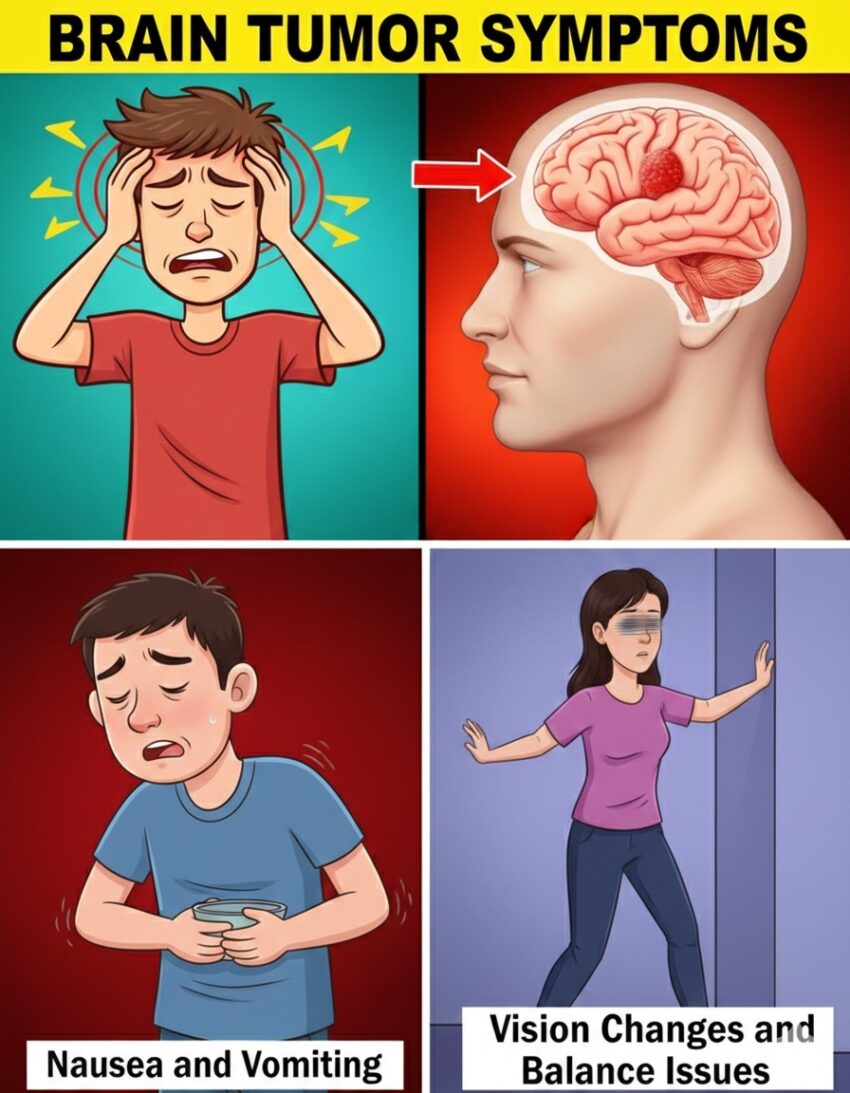
10 Early Signs of a Brain Tumor You Should Never Ignore – What Everyone Needs to Know
Introduction
Brain tumors, whether benign or malignant, can be life-threatening if not detected early. Unfortunately, early symptoms are often subtle and easily mistaken for stress, fatigue, or other common health issues. Being aware of warning signs can make a critical difference in seeking timely medical care and improving treatment outcomes.
This guide highlights 10 early signs of a brain tumor that you should never ignore.
1. Persistent Headaches
While occasional headaches are common, a tumor-related headache often:
- Is new or different from your usual headaches
- Worsens over time or becomes more frequent
- Is more intense in the morning or at night
- May worsen with coughing, sneezing, or sudden movement
2. Vision Problems
A growing brain tumor can put pressure on areas that control vision. Watch for:
- Blurred or double vision
- Loss of peripheral vision
- Sudden difficulty seeing in low light
Prompt evaluation by an eye doctor or neurologist is essential if these occur.
3. Seizures
Seizures are one of the most alarming signs of a brain tumor. They may present as:
- Convulsions or shaking episodes
- Brief lapses in awareness or staring spells
- Uncontrolled jerking of arms or legs
Even a single seizure should be medically investigated.
4. Nausea and Vomiting
Frequent nausea or vomiting, especially when unrelated to food, stress, or illness, can indicate increased pressure inside the skull caused by a tumor.
5. Cognitive or Personality Changes
A brain tumor may affect memory, reasoning, or mood. Possible signs include:
- Confusion or difficulty concentrating
- Trouble remembering names or recent events
- Sudden changes in personality, mood swings, or irritability
Family and friends often notice these changes first.
6. Weakness or Numbness
Pressure on the brain can impair movement or sensation. Early indicators include:
- Weakness in one side of the body or face
- Numbness or tingling in arms, legs, or hands
- Difficulty walking or balancing
7. Speech Difficulties
Tumors near language centers may cause:
- Slurred or slow speech
- Difficulty finding the right words
- Trouble understanding others
8. Hearing Problems
Some tumors affect the auditory nerves or brain regions responsible for hearing. Symptoms may include:
- Sudden hearing loss in one ear
- Ringing or persistent buzzing (tinnitus)
- Difficulty following conversations
9. Fatigue and Sleep Changes
Unexplained exhaustion, despite adequate rest, can signal underlying issues. A tumor may disrupt sleep patterns or cause persistent daytime sleepiness.
10. Loss of Balance or Coordination
Tumors affecting the cerebellum or brainstem may lead to:
- Frequent falls or clumsiness
- Difficulty performing fine motor tasks, such as writing or buttoning clothes
- Vertigo or dizziness
When to See a Doctor
If you experience any combination of these symptoms, especially if they persist or worsen, seek medical attention immediately. Early detection can dramatically improve treatment options and outcomes.
A neurologist may recommend:
- MRI or CT scans
- Neurological exams
- Blood tests to rule out other conditions
Conclusion
Brain tumors are rare, but early recognition of warning signs can save lives. Persistent headaches, vision changes, seizures, or sudden cognitive or physical changes should never be ignored. Being proactive about symptoms, seeking medical evaluation, and staying informed are essential steps for protecting your brain health.
Even if the symptoms turn out to have a different cause, early medical attention ensures you receive proper care and peace of mind.
If you want, I can also make a quick reference table of the 10 early signs with red-flag severity levels, so it’s easier to spot which symptoms require urgent action.
Do you want me to create that table?
