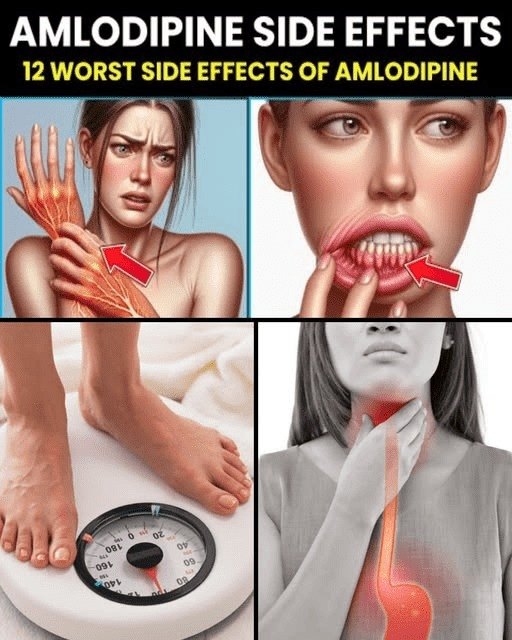
12 Worst Side Effects of Amlodipine You Should NEVER Ignore
Introduction
Amlodipine is a commonly prescribed medication used to treat high blood pressure (hypertension) and chest pain (angina). It works by relaxing blood vessels, making it easier for the heart to pump blood.
While many people tolerate amlodipine well, some may experience side effects — and certain symptoms should never be ignored. If you are taking this medication, knowing the warning signs can help you act quickly if problems arise.
1. Severe Swelling (Edema)
One of the most common but concerning side effects is swelling in the:
- Ankles
- Feet
- Legs
- Hands
Mild swelling is common, but sudden or severe swelling should be reported to your doctor.
2. Rapid or Irregular Heartbeat
Amlodipine can sometimes cause:
- Heart palpitations
- Racing heartbeat
- Irregular rhythm
Seek medical attention if it feels intense or persistent.
3. Severe Dizziness or Fainting
Because it lowers blood pressure, amlodipine may cause:
- Lightheadedness
- Fainting spells
- Feeling unstable when standing
This may signal dangerously low blood pressure.
4. Chest Pain That Gets Worse
Although used for angina, in rare cases it can initially:
- Worsen chest pain
- Trigger new chest discomfort
This requires immediate evaluation.
5. Shortness of Breath
Difficulty breathing may indicate:
- Fluid buildup
- Heart complications
- Allergic reaction
Seek urgent care if breathing becomes difficult.
6. Severe Fatigue or Weakness
Extreme tiredness beyond normal may suggest:
- Blood pressure too low
- Heart strain
- Electrolyte imbalance
7. Swelling of the Face, Lips, or Tongue
This may signal a serious allergic reaction (angioedema).
Call emergency services immediately if accompanied by:
- Trouble breathing
- Difficulty swallowing
8. Liver Problems
Rarely, amlodipine may affect the liver. Warning signs include:
- Yellowing of the skin or eyes (jaundice)
- Dark urine
- Severe abdominal pain
9. Unusual Bruising or Bleeding
Unexpected bruises or bleeding may require medical attention.
10. Persistent Nausea
Ongoing nausea or stomach pain should be evaluated, especially if severe.
11. Gum Swelling (Gingival Hyperplasia)
Amlodipine may cause:
- Swollen or overgrown gums
- Gum tenderness
Good oral hygiene and dental visits are important.
12. Severe Mood Changes or Confusion
Though uncommon, any sudden mental changes should be discussed with a healthcare provider.
When to Seek Emergency Help
Call emergency services immediately if you experience:
- Severe chest pain
- Fainting
- Swelling of face or throat
- Trouble breathing
- Signs of stroke
Important Reminder
Never stop taking amlodipine suddenly without medical guidance. Stopping abruptly can cause:
- Blood pressure spikes
- Increased risk of heart attack or stroke
Always consult your doctor if you experience side effects.
Conclusion
Amlodipine is effective for controlling blood pressure and angina, but certain side effects should never be ignored. Swelling, severe dizziness, chest pain, breathing problems, or allergic reactions require prompt medical attention.
If you’re concerned about symptoms, speak with your healthcare provider — early action can prevent serious complications.
If you’d like, I can also provide a simple guide on how to safely manage blood pressure medications.
