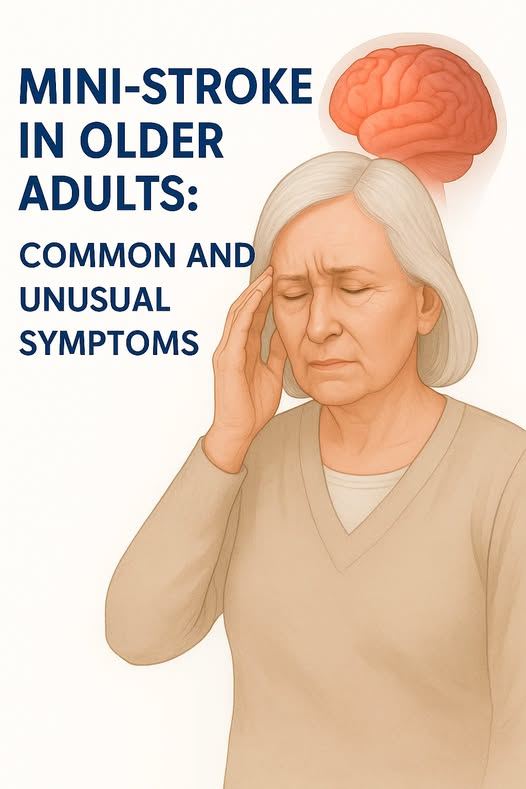
5 Critical Health Signals of a Mini Stroke in Seniors That Shouldn’t Be Ignored
A mini stroke, also known as a transient ischemic attack (TIA), occurs when blood flow to the brain is temporarily blocked. While symptoms may last only a few minutes and disappear within 24 hours, a TIA is a major warning sign of a possible future stroke. Seniors should be especially alert.
1. Sudden Weakness or Numbness
- Often occurs on one side of the body, including the face, arm, or leg.
- May cause drooping of the face or difficulty lifting an arm.
- Even brief weakness should not be ignored.
2. Trouble Speaking or Understanding Speech
- Slurred speech, difficulty finding words, or confusion are warning signs.
- Family members may notice the person struggling to form sentences or respond appropriately.
3. Vision Problems
- Sudden blurred, double, or loss of vision in one or both eyes.
- Can also include difficulty seeing on one side of the visual field.
4. Sudden Dizziness or Loss of Balance
- Feeling lightheaded, unsteady, or experiencing vertigo.
- Trouble walking or coordinating movements may indicate reduced blood flow to the brain.
5. Severe Headache Without Warning
- A sudden, intense headache, especially when accompanied by the other symptoms above, can signal a mini stroke.
What Seniors Should Do Immediately
- Call emergency services (911 in the U.S.) if you notice any of these symptoms, even if they disappear quickly.
- A doctor may perform tests such as a CT scan, MRI, or blood flow studies to assess stroke risk.
- Early intervention can prevent a full stroke and protect brain health.
💡 Bottom Line:
Mini strokes are temporary but serious warning signs. Recognizing these five signals early — weakness, speech problems, vision changes, dizziness, or sudden headache — and seeking immediate medical attention can save lives and prevent lasting damage.
