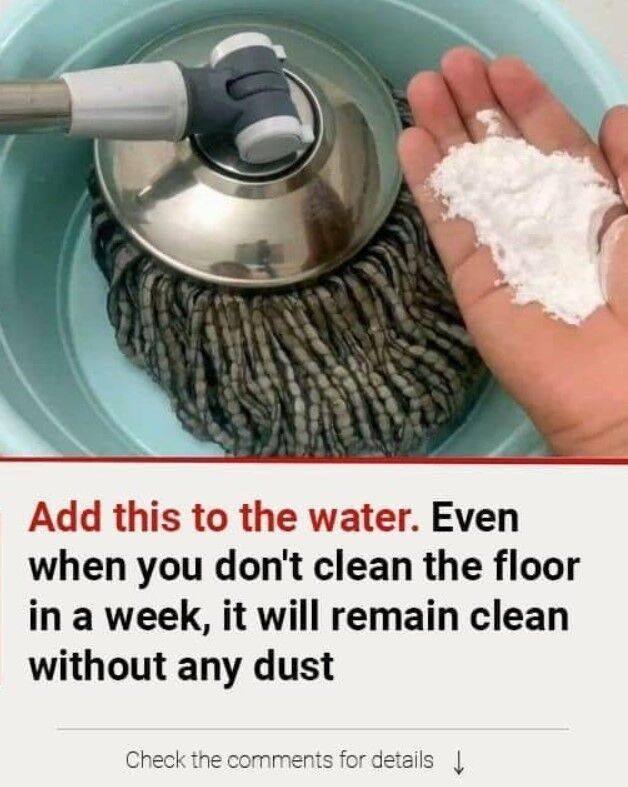
That headline is popular—but let’s translate it into a safe, realistic cleaning tip (no gimmicks, no damage to floors).
What People Mean by “Add This to Your Water”
The most common and actually safe option is:
✅ White Vinegar
Why it works:
- Cuts grime and residue
- Reduces static electricity (static attracts dust)
- Leaves floors cleaner so dust settles more slowly
Simple Dust-Reducing Floor Mix
- 1 bucket warm water
- ½ cup white vinegar
- (Optional) 5–10 drops essential oil (lemon, eucalyptus, lavender)
Mop as usual. Floors dry without residue, which helps dust build up more slowly.
🚫 What NOT to Use (Despite Viral Claims)
❌ Fabric softener
- Leaves a waxy film
- Attracts more dust over time
- Makes floors slippery and unsafe
❌ Dish soap
- Leaves residue that traps dirt
❌ Oil-heavy mixes
- Can damage wood, laminate, and vinyl
🧹 Why This Helps Reduce Dust (But Doesn’t Eliminate It)
- Dust sticks to residue and static
- Vinegar removes both
- Cleaner surfaces = less dust clinging, not zero dust forever
No solution will make floors permanently dust-free—but this extends the time between cleanings.
🪵 Floor-Type Safety
- ✔ Tile, vinyl, laminate: Safe
- ✔ Sealed hardwood: Safe in moderation
- ❌ Unsealed wood or stone: Skip vinegar
💡 Bottom line:
Adding vinegar to mop water helps floors stay cleaner and reduces dust buildup, but claims of “never cleaning again” are exaggerated.
If you want, I can:
- Adjust the mix for wood vs tile
- Share a daily 2-minute dust prevention trick
- Help you turn this into a viral-but-honest caption
Just say the word 🙂
