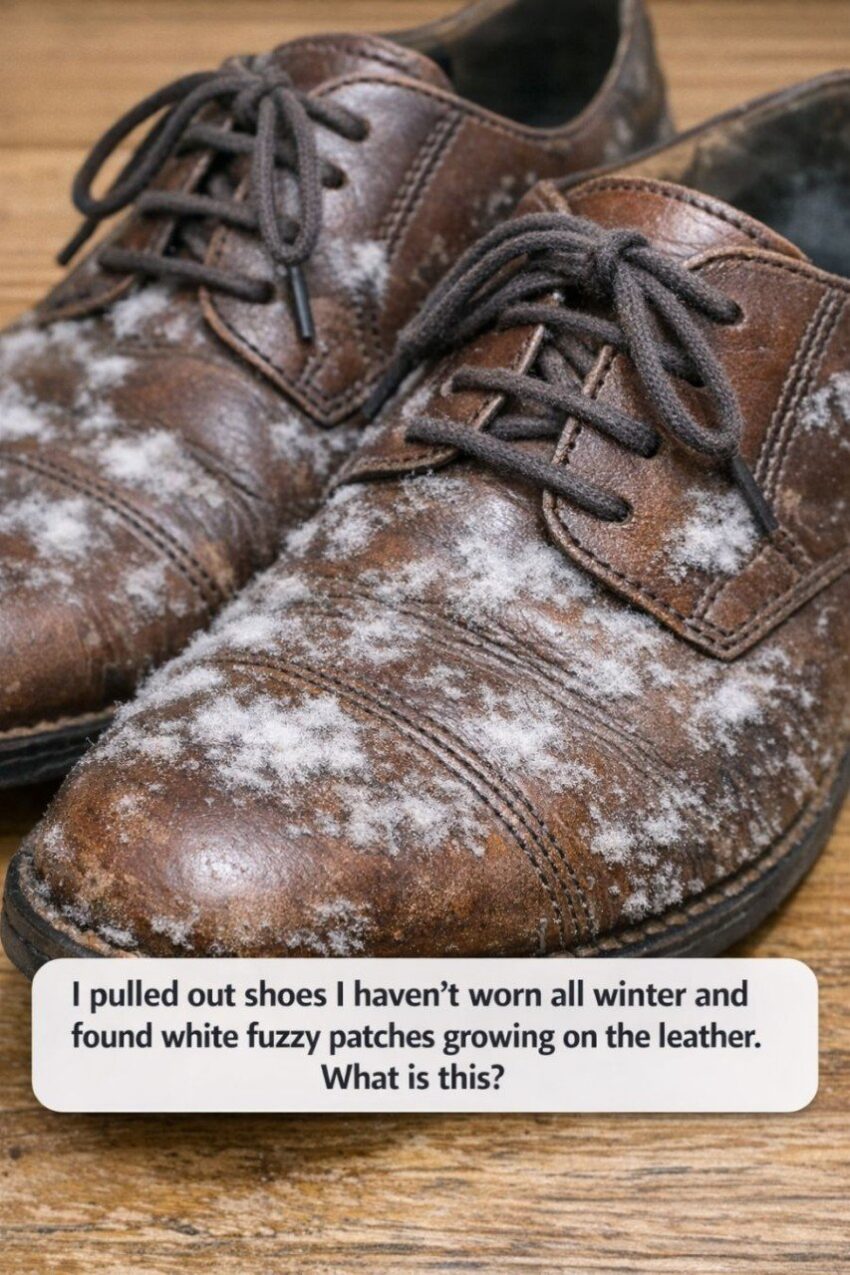
Ah — that white fuzzy stuff on your shoes is almost certainly mold or mildew. It’s very common when leather shoes sit in damp or poorly ventilated areas over the winter. Here’s the breakdown:
What It Is
- Mold / Mildew: A type of fungus that grows on organic surfaces (like leather) when exposed to moisture and darkness.
- Appears as white, fuzzy patches, sometimes gray or green.
- Usually surface-level, but can damage leather if left untreated.
Why It Happens
- Moisture: Even a little humidity can trigger mold growth on leather.
- Poor Ventilation: Closed closets, boxes, or shoe racks without airflow create a perfect environment.
- Sweat Residue: Leather absorbs moisture from feet during wear; if not cleaned, it can feed mold.
- Temperature Fluctuations: Warm, damp environments accelerate fungal growth.
How to Remove Mold Safely
- Move to fresh air
- Take shoes outside to avoid spreading spores indoors.
- Brush off surface mold
- Use a soft brush or cloth; do not inhale spores.
- Wipe with a vinegar solution
- Mix 1 part white vinegar + 1 part water, gently wipe the leather.
- Vinegar kills mold but may slightly darken the leather. Test first on a small area.
- Dry completely
- Air-dry in a well-ventilated area, away from direct sunlight (sunlight can crack leather).
- Condition the leather
- Use a leather conditioner after cleaning to restore moisture lost from cleaning.
Prevention Tips
- Store leather shoes in breathable cloth bags, not plastic.
- Keep shoes in a cool, dry, ventilated area.
- Use silica gel packs or cedar shoe inserts to absorb moisture.
- Wipe shoes down and condition before storing for long periods.
🧠 Bottom Line
White fuzzy patches on leather shoes = mold/mildew, not permanent rot if caught early. Cleaning and proper storage will save your shoes and prevent recurrence.
If you want, I can make a step-by-step guide to rescue winter shoes from mold with photos, so you can restore them safely and completely.
Do you want me to do that?
