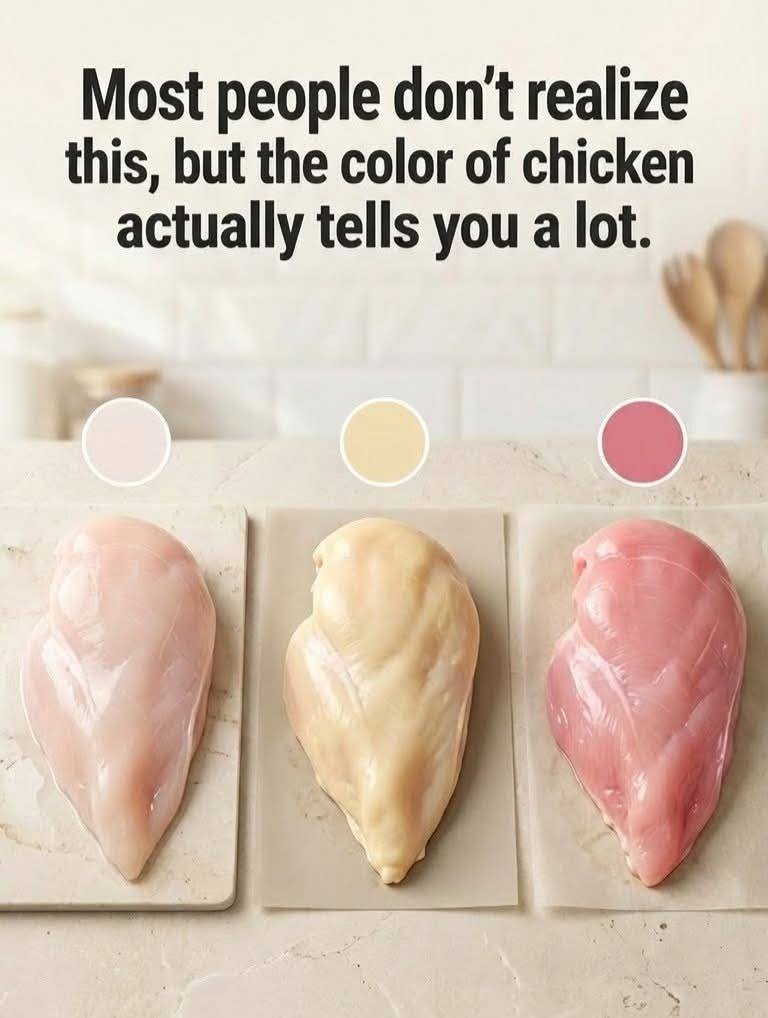
Ah — that statement is one of those food myths presented as “common knowledge”. Let’s clarify the truth about chicken color and quality.
Chicken Color: What It Actually Means
1. Skin Color vs Meat Color
- Skin color (yellow, white, or even slightly darker) is mostly determined by:
- Breed of the chicken
- Diet (corn-fed chickens often have yellower skin due to carotenoids)
- Meat color (breast vs thigh) reflects muscle use, not “quality”:
- Breast = lighter because it’s a less used muscle
- Thigh/leg = darker because it’s more active and has more myoglobin
2. Color ≠ Freshness
- Fresh chicken can have:
- Slightly pink, pale, or even yellowish skin
- Freshness is better judged by:
- Smell: should be neutral, not sour
- Texture: firm and springy
- Sell-by date
3. Quality Factors That Matter
- How it was raised: free-range or pasture-raised vs factory farmed
- Feed quality: influences nutrition (omega-3s, vitamin content)
- Storage and handling: proper refrigeration and cooking
⚠️ Misconception
- Many people think “yellow chicken = better” or “white chicken = worse”
- This is mostly cultural preference, not scientific quality measurement
🧠 Bottom Line
- Chicken color is mostly cosmetic
- The true markers of quality are: freshness, proper handling, and how the chicken was raised
If you want, I can make a quick guide to choosing high-quality chicken at the store, including what to check for freshness, taste, and nutrition, so you never get tricked by skin color myths.
Do you want me to do that?
