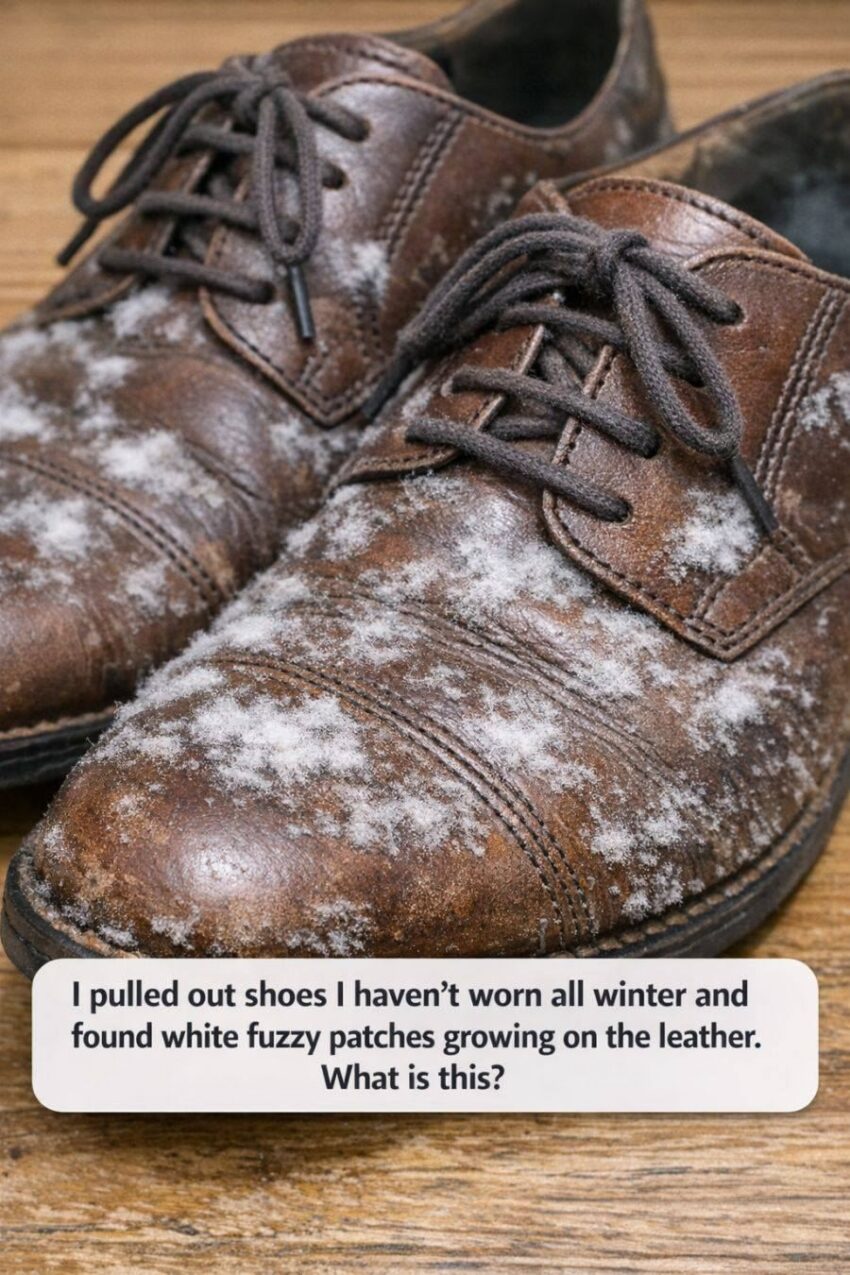
Ah — what you’re seeing on your leather shoes is almost certainly mold or mildew. That white fuzzy patch is a common sign of fungal growth when shoes are stored in damp or poorly ventilated conditions, especially over winter.
Why It Happens
- Moisture: Leather can absorb humidity from the air.
- Poor ventilation: Shoes stored in dark closets or boxes without airflow create a perfect environment for mold.
- Organic material: Leather and shoe linings can feed mold spores.
How to Tell It’s Mold
- Appearance: White, gray, or even green fuzzy patches
- Smell: Musty or earthy odor
- Texture: Can be powdery or slightly fuzzy
How to Clean Leather Shoes Safely
- Brush Off Mold
- Use a soft brush or dry cloth outside to avoid spreading spores indoors.
- Clean with Mild Solution
- Mix equal parts water and white vinegar or a small amount of mild soap
- Wipe leather gently with a damp cloth
- Dry Thoroughly
- Let shoes air dry in a well-ventilated area, avoiding direct sunlight which can crack leather
- Condition Leather
- Use a leather conditioner after cleaning to restore oils and prevent drying
- Prevent Future Mold
- Store shoes in a dry, ventilated area
- Consider using silica gel packs or cedar shoe trees
⚠️ Important
- If the mold has penetrated deeply or the smell persists, it may damage the leather permanently. In that case, consider professional leather cleaning.
- Mold spores can trigger allergies or respiratory irritation, so avoid breathing them in while cleaning.
I can also give a step-by-step guide to completely remove mold from multiple pairs of shoes and prevent it from coming back, so your winter footwear stays safe all year.
Do you want me to do that?
