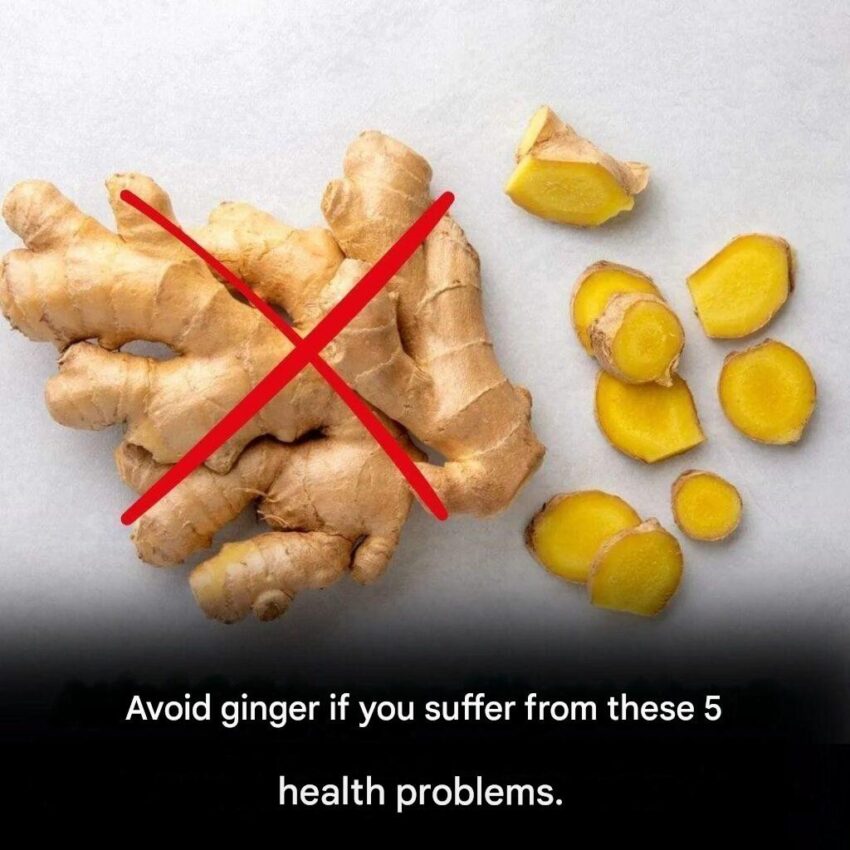
Love ginger—but this is where balance matters.
Let’s talk about the less-discussed side of this “miracle root.”
Ginger Danger Zones: 5 Health Conditions Where This “Miracle Root” Can Actually Harm You
Ginger is famous for easing digestion, calming inflammation, and supporting immunity. For many people, it’s incredibly helpful.
But natural doesn’t always mean harmless—especially in higher doses or with certain health conditions.
Here are five situations where ginger deserves caution, not blind praise.
⚠️ 1. Blood Thinning & Bleeding Disorders
Ginger has natural blood-thinning properties.
This can be a problem if you:
- Have a bleeding disorder
- Are taking blood thinners (like warfarin, aspirin, or similar meds)
- Are preparing for surgery
Too much ginger may increase bleeding risk or interfere with clotting.
❤️ 2. Heart Conditions & Blood Pressure Issues
Ginger can lower blood pressure and affect heart rhythm in some people.
That’s great—unless:
- Your blood pressure already runs low
- You’re on BP or heart medications
In those cases, ginger may amplify medication effects, causing dizziness, weakness, or irregular heartbeat.
🍬 3. Diabetes (Especially With Medication)
Ginger can help lower blood sugar—but that’s a double-edged sword.
If you’re diabetic and:
- Using insulin
- Taking blood-sugar–lowering medication
Large amounts of ginger may push blood sugar too low, increasing the risk of hypoglycemia.
🔥 4. Acid Reflux & Sensitive Stomachs
Despite its reputation for aiding digestion, ginger is warming and stimulating.
For some people, especially in large doses, it can:
- Worsen acid reflux
- Increase heartburn
- Irritate the stomach lining
This is more common with concentrated forms like ginger shots, capsules, or strong teas.
🤰 5. Pregnancy (High Doses)
Small amounts of ginger are often used for nausea—but excessive intake may be risky.
High doses have been linked to:
- Increased bleeding risk
- Possible uterine stimulation
Most guidelines recommend keeping ginger intake moderate and food-based during pregnancy unless advised otherwise by a professional.
🧠 The Real Issue Isn’t Ginger — It’s the Dose
Ginger becomes problematic when it’s:
- Taken in large quantities
- Used daily in concentrated supplements
- Combined with certain medications
Fresh ginger in food is usually safe for most people. Capsules, extracts, and “shots” are where issues tend to arise.
The Bottom Line
Ginger is powerful—but power cuts both ways.
It’s not about avoiding ginger.
It’s about using it wisely, especially if you have underlying health conditions or take medication.
When it comes to herbs and roots, more is not always better.
If you want, I can:
- Turn this into a viral cautionary carousel
- Create a “who should avoid” food series
- Rewrite it for a 50+ audience
- Compare ginger with turmeric, garlic, or cinnamon
Just tell me the direction 🌿
