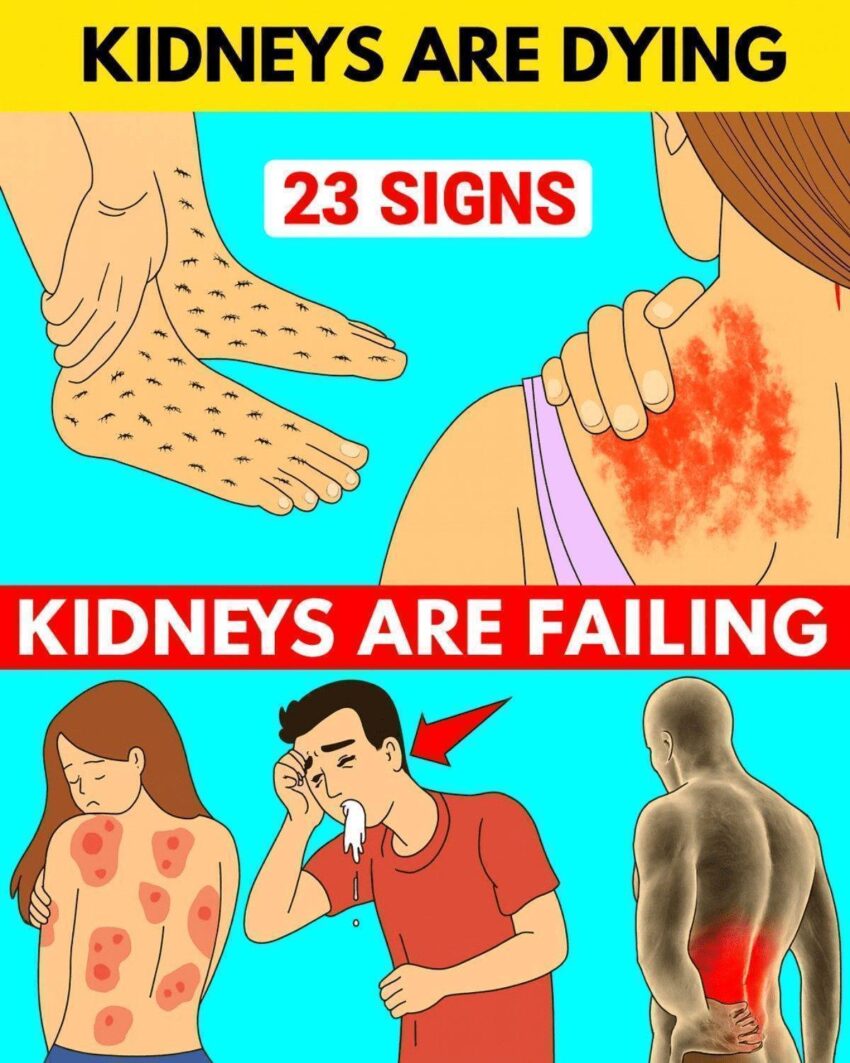
Headlines like “23 strange signs your kidneys might be in trouble” can sound alarming. While kidney disease can be subtle early on, there are real warning signs worth knowing — especially if you have high blood pressure, diabetes, or are over 60.
Here are important symptoms that may suggest kidney problems:
🚨 Common Early Signs
1️⃣ Changes in Urination
- Urinating more often (especially at night)
- Urinating less than usual
- Foamy or bubbly urine (may signal protein leakage)
- Dark, cloudy, or bloody urine
2️⃣ Swelling (Edema)
Kidneys regulate fluid balance. Trouble filtering can cause:
- Swelling in feet, ankles, legs
- Puffy eyes
- Swollen hands
3️⃣ Fatigue and Weakness
Damaged kidneys produce less erythropoietin, a hormone that helps make red blood cells — leading to anemia and tiredness.
4️⃣ Itchy Skin
Waste buildup in the blood can cause persistent itching.
5️⃣ Metallic Taste or Bad Breath
Toxin buildup (uremia) may cause:
- Ammonia-like breath
- Food tasting different
- Loss of appetite
6️⃣ Nausea and Vomiting
Advanced toxin buildup can trigger digestive symptoms.
7️⃣ Muscle Cramps
Electrolyte imbalances (like low calcium or high potassium) can cause cramping.
8️⃣ Shortness of Breath
Fluid buildup in the lungs or anemia may cause breathing difficulty.
9️⃣ High Blood Pressure
Kidneys help regulate blood pressure — problems can both cause and result from hypertension.
🔟 Lower Back or Side Pain
Pain near the kidneys (below the ribs, on either side of the spine) can signal infection or stones.
⚠️ Who Is at Higher Risk?
- People with diabetes
- People with high blood pressure
- Family history of kidney disease
- Over age 60
- Long-term use of certain pain medications
🩺 Important Reality
Early kidney disease often has no obvious symptoms. The only way to know for sure is through:
- Blood tests (creatinine, eGFR)
- Urine tests (protein levels)
💡 Bottom Line
If you notice persistent swelling, changes in urination, fatigue, or foamy urine, don’t ignore it — see a healthcare provider. Early detection can significantly slow progression.
If you’d like, I can also share simple habits that protect kidney function long-term.
