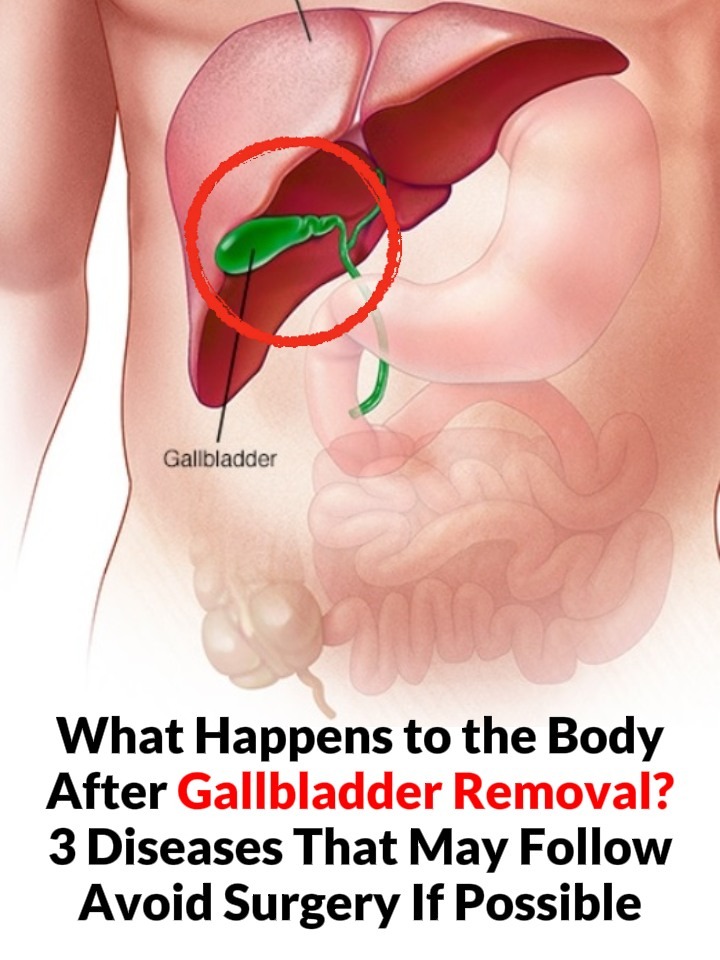
Gallbladder removal (called cholecystectomy) is a very common surgery — and for many people, it’s the safest and most effective treatment for painful gallstones or inflammation.
However, like any surgery, it can have effects on digestion. Let’s look at what really happens — without fear-based exaggeration. 🩺
🧠 What the Gallbladder Actually Does
The gallbladder stores bile made by the liver and releases it when you eat fat.
After removal:
- The liver still makes bile
- Bile flows continuously into the intestine instead of being released in bursts
Most people live completely normal lives without it.
🔄 Common Changes After Gallbladder Removal
1️⃣ Temporary Digestive Upset
- Diarrhea
- Bloating
- Loose stools after fatty meals
This usually improves within weeks to months.
2️⃣ Fat Digestion Sensitivity
Some people become more sensitive to:
- Very fatty meals
- Greasy or fried foods
Smaller, balanced meals often solve this.
⚠️ 3 Conditions Sometimes Associated After Surgery
These are possible, not guaranteed:
1️⃣ Post-Cholecystectomy Syndrome
- Ongoing abdominal discomfort
- Indigestion
- Diarrhea
Occurs in a small percentage of patients.
2️⃣ Bile Acid Diarrhea
- Continuous bile flow may irritate intestines
- Can cause chronic loose stools
- Often treatable with medication
3️⃣ Increased Risk of Certain Digestive Issues
Some studies suggest slightly higher risk of:
- Acid reflux
- Irritable bowel symptoms
But many people experience no long-term problems.
🛑 Should You “Avoid Surgery If Possible”?
It depends.
Gallbladder removal is usually recommended when there is:
- Recurrent gallstone attacks
- Infection (cholecystitis)
- Pancreatitis caused by gallstones
- Severe pain affecting quality of life
Delaying necessary surgery can sometimes be more dangerous than the surgery itself.
🥗 How to Support Digestion After Removal
✔ Eat smaller meals
✔ Reduce very high-fat foods
✔ Increase fiber gradually
✔ Stay hydrated
✔ Maintain healthy weight
💡 Bottom Line
Most people live healthy, normal lives after gallbladder removal.
Serious long-term “diseases” are not inevitable.
Surgery decisions should be based on:
- Severity of symptoms
- Risk of complications
- Medical imaging and lab results
- Doctor’s recommendation
If you’d like, I can also explain:
- Signs gallbladder surgery is truly necessary
- Natural ways to reduce gallstone risk
- What recovery typically looks like week by week
