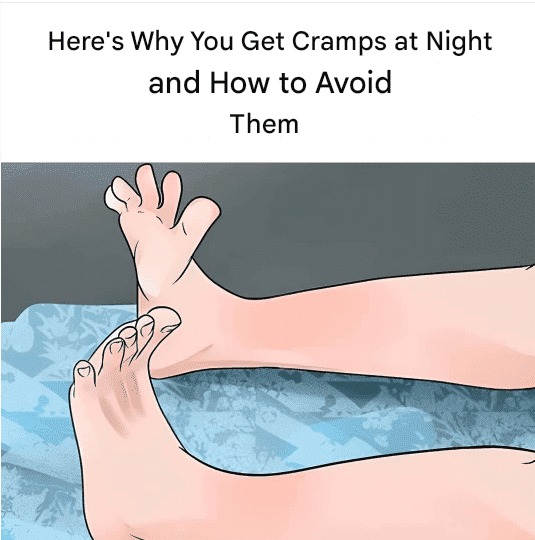
Nighttime cramps—those sudden, painful muscle contractions in your calves, feet, or thighs—are surprisingly common, especially in adults. Here’s why they happen and what you can do about them:
Common Causes of Night Cramps
1️⃣ Dehydration
- Muscles need proper hydration to function.
- Lack of water or electrolytes (potassium, magnesium, calcium) can trigger cramps.
2️⃣ Electrolyte Imbalance
- Low levels of magnesium, potassium, or calcium can make muscles more prone to involuntary contractions.
- Causes include poor diet, sweating, or certain medications (like diuretics).
3️⃣ Muscle Fatigue or Overuse
- Exercising intensely during the day or standing for long periods can leave muscles tight at night.
- Calves and feet are most affected because they bear weight all day.
4️⃣ Poor Circulation
- Reduced blood flow to muscles while lying down can cause cramps.
- Conditions like peripheral artery disease or diabetes may contribute.
5️⃣ Nerve Compression
- Compression of nerves in the spine or legs can lead to involuntary muscle spasms.
6️⃣ Medications
- Some medications, like statins, diuretics, or asthma drugs, increase the risk of cramps.
7️⃣ Pregnancy
- Extra weight and changes in circulation often trigger leg cramps, especially in the third trimester.
How to Prevent Night Cramps
- Stay Hydrated – Drink water throughout the day.
- Stretch Before Bed – Calf stretches or yoga can relax muscles.
- Eat a Balanced Diet – Include foods rich in potassium (bananas), magnesium (nuts, seeds), and calcium (dairy, leafy greens).
- Massage or Warm Compress – Helps improve blood flow and relax muscles.
- Adjust Sleeping Position – Avoid pointing toes downward; flexing feet toward the body can prevent calf cramps.
- Wear Supportive Footwear – Proper shoes reduce strain on calves and feet.
⚠️ When to See a Doctor
- Cramps are severe, frequent, or persistent.
- Accompanied by swelling, redness, numbness, or weakness.
- Could indicate underlying issues like nerve problems, circulation disorders, or electrolyte imbalances.
Night cramps are often preventable with hydration, stretching, and diet, but persistent cases should be checked medically.
If you want, I can create a “7 best bedtime stretches and tricks to stop night cramps instantly” guide. It’s super practical and easy to follow.
