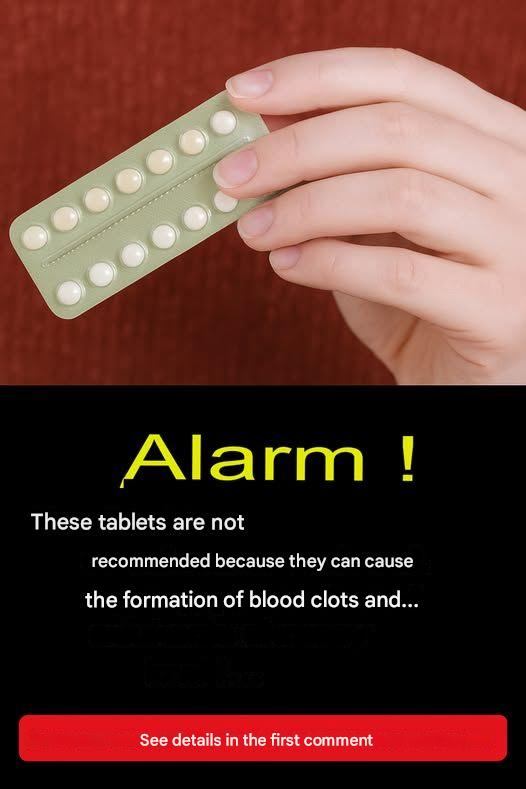
Here’s an important drug safety warning about certain tablets that may affect blood clotting — and why you should consult your doctor before taking them.
⚠️ Note: Always seek professional medical advice before stopping or starting any medication.
🔎 Medicines and Supplements That Can Affect Blood Clots
🩸 1. Hormone‑Based Birth Control or Menopause Pills
Certain estrogen‑containing tablets, like some oral contraceptives or hormone‑replacement therapy (HRT), have been linked with a higher risk of blood clots (venous thromboembolism) compared with non‑hormonal treatments. These drugs can increase the likelihood of dangerous clots in legs, lungs, or other vessels — especially in women with risk factors like smoking, high blood pressure, or a history of clots. (Wikipedia)
💡 Who may be at higher risk:
- Smokers aged 35 or older
- People with obesity
- Those with a family or personal history of clotting disorders
Important: These tablets should not be used without a doctor’s assessment of your clotting risk.
🩹 2. Blood Thinners (Anticoagulants)
Medicines like Apixaban and Warfarin are designed to prevent clots, but they increase bleeding risk because they reduce the blood’s ability to clot. (nhs.uk)
⚠️ You should not take these unless a doctor prescribes them — incorrect or unsupervised use can cause:
- Severe bleeding (e.g., nosebleeds, internal bleeding)
- Dangerously slow clotting after injury
- Complications with surgery or dental work
Always tell your doctor about other medications or supplements you take, as they may interact with these and increase bleeding risk. (nhs.uk)
🚨 What You Should Do
✔ Talk to your doctor first
- Never take blood‑thinning medications or hormonal tablets without a prescription.
- If you have a history of blood clots, hypertension, diabetes, or stroke, a doctor must evaluate the risks.
✔ Know your personal risk factors
- Family history of clotting disorders
- Smoking
- Pregnancy or postpartum period
- Obesity or sedentary lifestyle
✔ Monitor for warning signs
Call a doctor right away if you notice:
- Unusual bruising
- Bloody or dark‑colored stools
- Severe headaches or dizziness
- Shortness of breath or chest pain
🩺 Bottom Line: Some tablets — especially certain hormone pills and blood‑thinning medications — can influence how your blood clots. That effect can be serious, either increasing your risk of clots or causing dangerous bleeding, depending on your health profile and how the drug is used. Always consult a healthcare professional before using these medicines to make sure they’re safe for you.
If you’d like, I can explain the difference between blood clots and bleeding risk, and how to spot the signs early.
