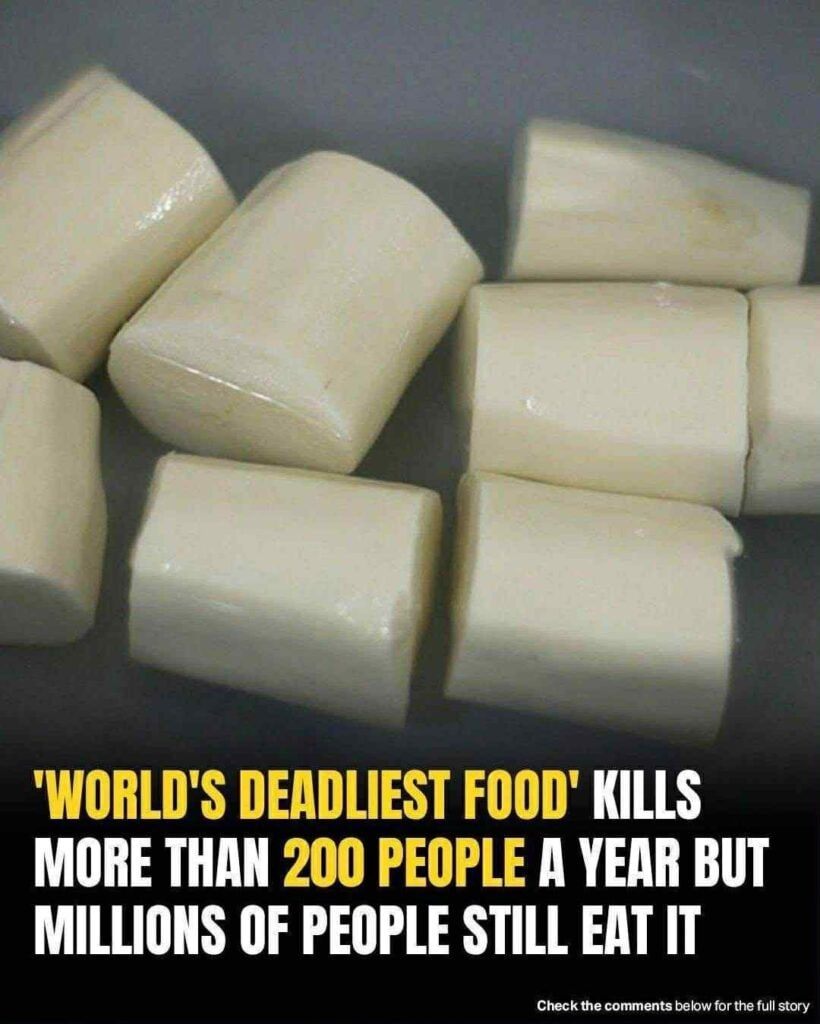
That headline is talking about Cassava—and like most viral posts, it’s partly true but very exaggerated.
🌍 What is cassava?
- A starchy root vegetable (also called yuca/manioc)
- Staple food for ~500 million people worldwide (LADbible)
- Common in Africa, Asia, and South America
⚠️ Why it’s called “deadly”
Cassava naturally contains chemicals called cyanogenic glycosides, which can turn into cyanide in the body.
- Eating it raw or improperly processed can cause:
- Poisoning
- Paralysis
- In severe cases, death (Live Science)
👉 The WHO estimates ~200 deaths per year from cassava poisoning (Live Science)
🧠 The important context (this is what headlines hide)
- 500 million people eat it regularly
- Only ~200 deaths/year
👉 That means the risk is extremely low when prepared properly
In fact:
- People have been safely eating cassava for centuries
- The danger comes from poor preparation, not the food itself
🔥 How it’s made safe
To remove toxins, cassava must be:
- Peeled
- Soaked in water
- Cooked (boiled, dried, or fermented)
These steps reduce cyanide to safe levels (Live Science)
⚖️ So is it really the “world’s deadliest food”?
Not really.
- It can be dangerous → yes
- But it’s also a lifeline food in many countries
- The “deadliest” label is mostly clickbait framing
🧾 Bottom line
- Cassava is only dangerous if eaten raw or badly prepared
- Properly cooked cassava is safe and widely consumed
- The viral headline overstates the risk to grab attention
If you want, I can tell you about other surprisingly dangerous foods (some are probably in your kitchen right now).
