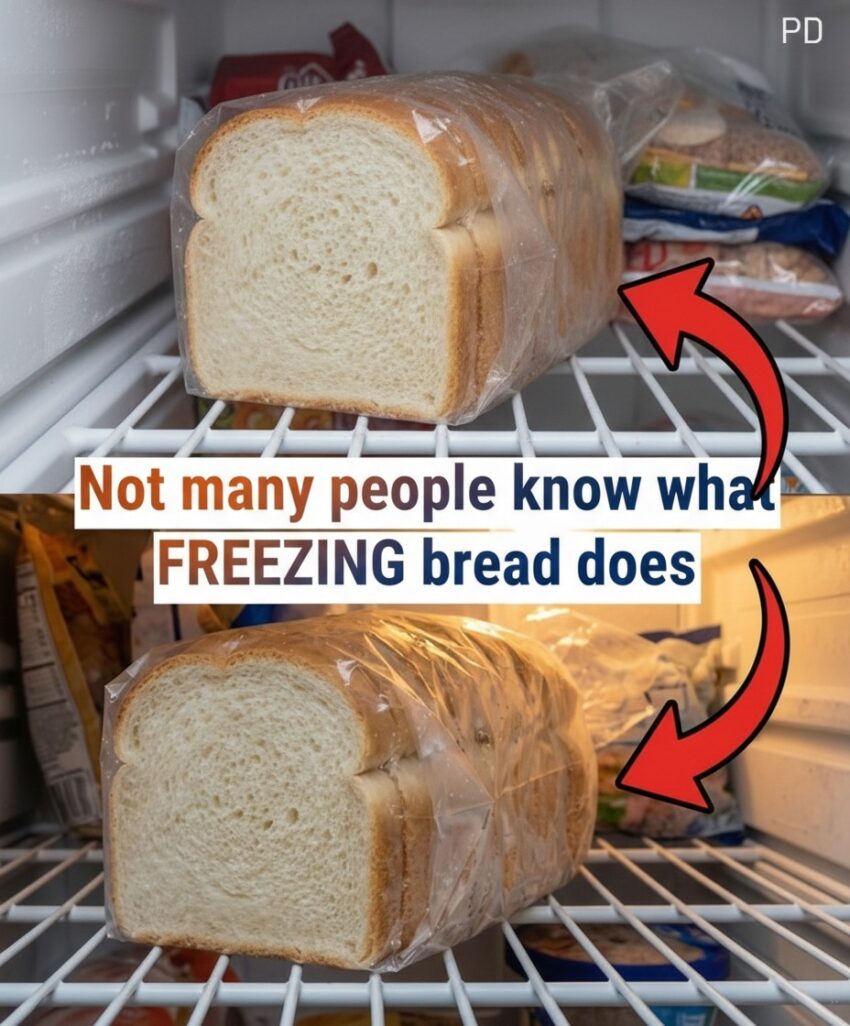
Freezing bread is actually a clever trick to extend its shelf life and maintain freshness, but it also causes some interesting changes at the molecular level. Here’s what happens:
1. Slows Staling
- Staling occurs when starch molecules (amylose and amylopectin) in bread crystallize over time, making it dry and hard.
- Freezing slows down this crystallization dramatically, keeping bread soft for weeks instead of days.
2. Prevents Mold
- Mold growth requires warmth and moisture.
- Freezing halts mold activity, letting you store bread safely for months.
3. Moisture Changes
- Bread can lose a little moisture in the freezer, leading to slightly drier texture after thawing if not properly wrapped.
- Best to use airtight freezer bags or wraps to reduce freezer burn.
4. Flavor Preservation
- Freezing preserves the flavor of bread, especially if frozen within a day or two of baking.
- Some artisanal breads may taste slightly different due to moisture redistribution, but generally, it’s minimal.
5. Tips for Best Results
- Slice bread before freezing so you can thaw only what you need.
- Thaw at room temperature or toast directly from the freezer.
- Avoid refreezing thawed bread — it accelerates staling.
✅ Pro tip: For a fresh-baked feel, pop frozen slices directly into a toaster. The heat restores softness and slightly re-crystallizes starches in a pleasant way.
If you want, I can explain why freezing bread actually stops the starch molecules from hardening—it’s a neat bit of food chemistry. Do you want me to?
