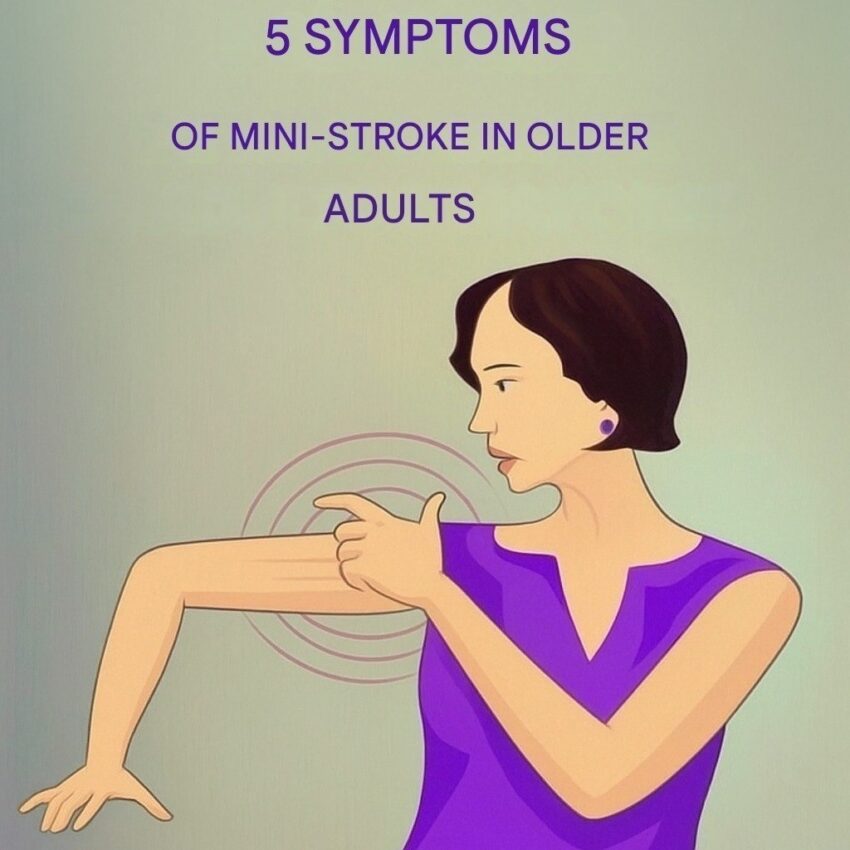
A “mini stroke” is medically called a Transient ischemic attack (TIA). It happens when blood flow to part of the brain is briefly blocked, usually for minutes to hours, and then resolves.
Even though symptoms go away, a TIA is a serious warning sign: it can be followed by a full stroke within days or weeks.
⚠️ 5 Symptoms of a Mini Stroke (TIA) in Seniors
1) Sudden weakness or numbness (one side)
- Face, arm, or leg on one side
- Drooping face or inability to lift an arm
2) Speech problems
- Slurred speech
- Difficulty finding words
- Confused or “not making sense”
3) Vision changes
- Sudden blurred vision
- Loss of vision in one or both eyes
- Double vision
4) Sudden dizziness or loss of balance
- Trouble walking straight
- Feeling like the room is spinning
- Falls without clear cause
5) Sudden severe headache (less common)
- Especially if different from usual headaches
- Can signal serious brain blood flow issues
🚨 Important warning
Even if symptoms last only a few minutes and disappear, it is still an emergency.
A TIA means:
“The brain was briefly starved of blood—and it may happen again more seriously.”
🧠 FAST test (easy way to remember stroke signs)
- F – Face drooping
- A – Arm weakness
- S – Speech difficulty
- T – Time to seek emergency help
⚠️ When to act immediately
Seek urgent medical care if:
- Symptoms appear suddenly
- Symptoms resolve quickly but were clear
- Multiple symptoms occur together
🧾 Bottom line
- A mini stroke is a temporary warning stroke
- Symptoms are sudden, one-sided, and neurological
- It should always be treated as an emergency, even if it passes
If you want, I can also explain how to reduce stroke risk in seniors (diet, blood pressure control, and daily habits) in a simple checklist.
