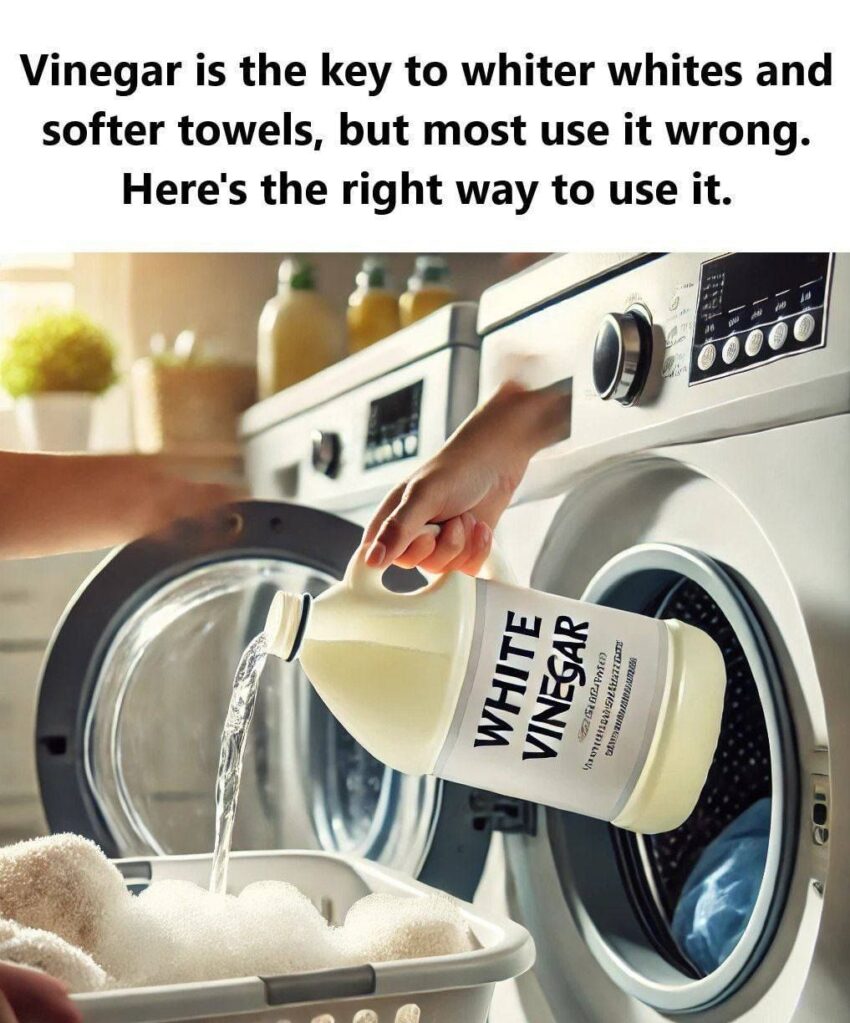
Vinegar is often used in laundry, and in some cases it can help with freshness and softness—but it’s not a miracle whitening agent, and many “viral hacks” exaggerate its effects.Used correctly, vinegar can support laundry care. Used incorrectly, it can damage fabrics or washing machines over time.
🧺 What vinegar actually does in laundry
✔ Helps remove odor
- Neutralizes musty or sweat smells
- Useful for towels, gym clothes, and damp laundry
✔ Reduces detergent residue
- Helps rinse out leftover soap buildup
- Can make fabrics feel softer
✔ Slightly brightens dull fabrics
- Works on light surface buildup, not true bleaching
- Does not actually “whiten” like bleach or oxygen cleaners
⚠️ Common mistakes people make
❌ Pouring vinegar directly onto clothes
- Can damage delicate fibers
- May cause uneven fading over time
❌ Mixing vinegar with bleach
- Creates toxic chlorine gas (dangerous)
❌ Using too much vinegar
- Can weaken rubber seals in washing machines
- May leave lingering odor if overused
🧼 The correct way to use vinegar
✔ In the rinse cycle (best method)
- Add ½ cup of white vinegar during rinse
- Do NOT mix with detergent in the same cycle
✔ For towels (softening effect)
- Use vinegar once every few washes
- Helps reduce stiffness caused by detergent buildup
✔ For odor-heavy laundry
- Pre-soak clothes in diluted vinegar (1:4 ratio with water)
- Then wash normally
🧠 What vinegar cannot do
- It does NOT truly whiten fabric like bleach
- It does NOT remove deep stains
- It does NOT replace detergent
🟢 Better options for whitening whites
For real whitening results, use:
- oxygen-based bleach
- enzyme detergents
- sunlight drying (natural brightening effect)
🧺 Bottom line
Vinegar is useful as a softener and deodorizer, not a whitening solution. It works best as a support tool, not the main cleaning agent.
If you want, I can show you:
- a safe “whites laundry routine” for brighter clothes
- how to remove tough stains (coffee, sweat, oil) properly
- or laundry myths that actually damage clothes over time
