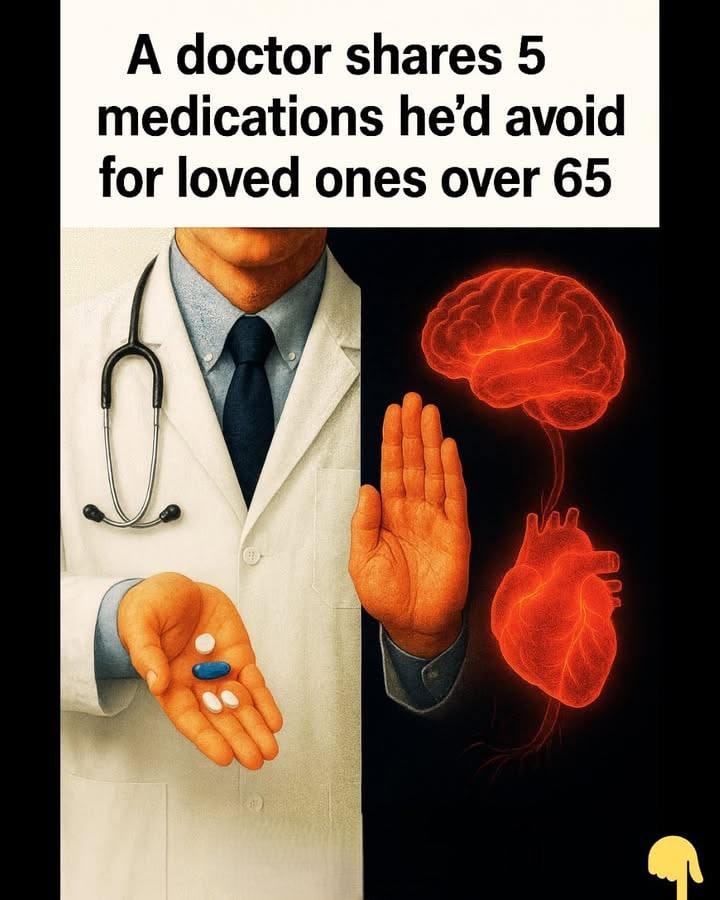
That kind of claim is meant to grab attention—and it’s worth unpacking carefully rather than taking it at face value.
There are legitimate concerns about certain medications in older adults. In medicine, there’s even a guideline called the Beers Criteria, which lists drugs that may pose higher risks for seniors due to side effects like confusion, falls, or organ strain.
Some commonly discussed categories include:
- Sedative sleep aids (like benzodiazepines): can increase fall risk and memory problems
- Strong anticholinergic drugs (found in some allergy or bladder meds): linked to confusion and cognitive decline
- Certain painkillers (NSAIDs): can affect kidneys or cause bleeding
- Some diabetes medications: may raise risk of dangerously low blood sugar
- Proton pump inhibitors (PPIs) when used long-term: possible links to bone loss or infections
That said, the idea of a doctor saying they’d never give these to someone they care about is often an oversimplification. In reality:
- Many of these drugs are still prescribed because benefits can outweigh risks in specific cases
- Safer alternatives aren’t always available or effective
- The key issue is individualized care, not blanket avoidance
A more balanced takeaway is this:
If you or someone close to you is older and taking multiple medications, it’s reasonable—and smart—to ask a doctor or pharmacist for a medication review. Questions like:
- “Do I still need all of these?”
- “Are there safer alternatives?”
- “What side effects should I watch for?”
These conversations can genuinely improve safety and quality of life.
If you want, share the specific drugs mentioned in that post—I can break down each one and tell you what’s accurate, exaggerated, or missing.
