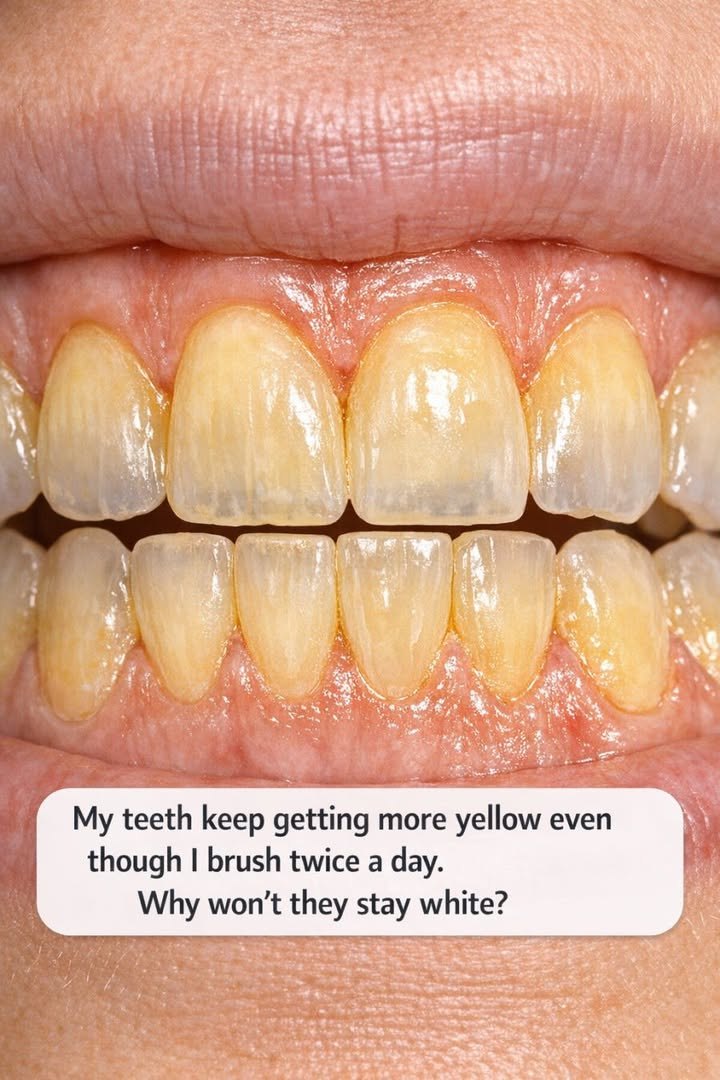
🦷 1. Natural tooth color (most common reason)
Teeth aren’t pure white underneath.
- The outer layer (enamel) is semi-translucent
- The layer underneath (dentin) is naturally yellowish
As enamel wears down with age, more dentin shows through → teeth look more yellow.
☕ 2. Staining from food and drinks
Even with brushing, pigments build up over time from:
- Coffee and tea
- Red wine
- Cola and dark sodas
- Curry, soy sauce, berries
These cause surface stains that toothpaste alone can’t fully remove.
🚬 3. Tobacco use
Smoking or vaping can cause deep stains that are harder to brush away.
🪥 4. Brushing technique (not just frequency)
Even brushing twice daily can miss spots if:
- You brush too quickly (less than 2 minutes)
- You don’t reach back teeth well
- You don’t floss (plaque between teeth stays)
🧬 5. Enamel thinning over time
Enamel can wear down due to:
- Acidic foods/drinks
- Grinding teeth (bruxism)
- Overly harsh brushing
Less enamel = more yellow appearance.
💧 6. Dry mouth
Less saliva means more staining because saliva naturally cleans the mouth.
🧠 7. Medications or health factors
Some medications or past conditions can also affect tooth color.
✔️ What actually helps whiten teeth
Brushing alone only removes surface debris. For visible whitening:
- Whitening toothpaste (slow improvement)
- Professional cleaning at a dentist (removes tartar + stains)
- Whitening strips or dentist-supervised whitening
⚠️ What doesn’t help much
- Brushing harder (can wear enamel)
- Random home hacks like lemon or baking soda misuse (can damage teeth)
🧠 The Bottom Line
Teeth stay yellow not because you’re brushing wrong, but because:
- Natural tooth structure changes over time
- Stains build up beyond what brushing can remove
Brushing is essential—but whitening usually needs professional cleaning or targeted whitening methods.
If you want, I can tell you:
- The fastest safe ways to visibly whiten teeth
