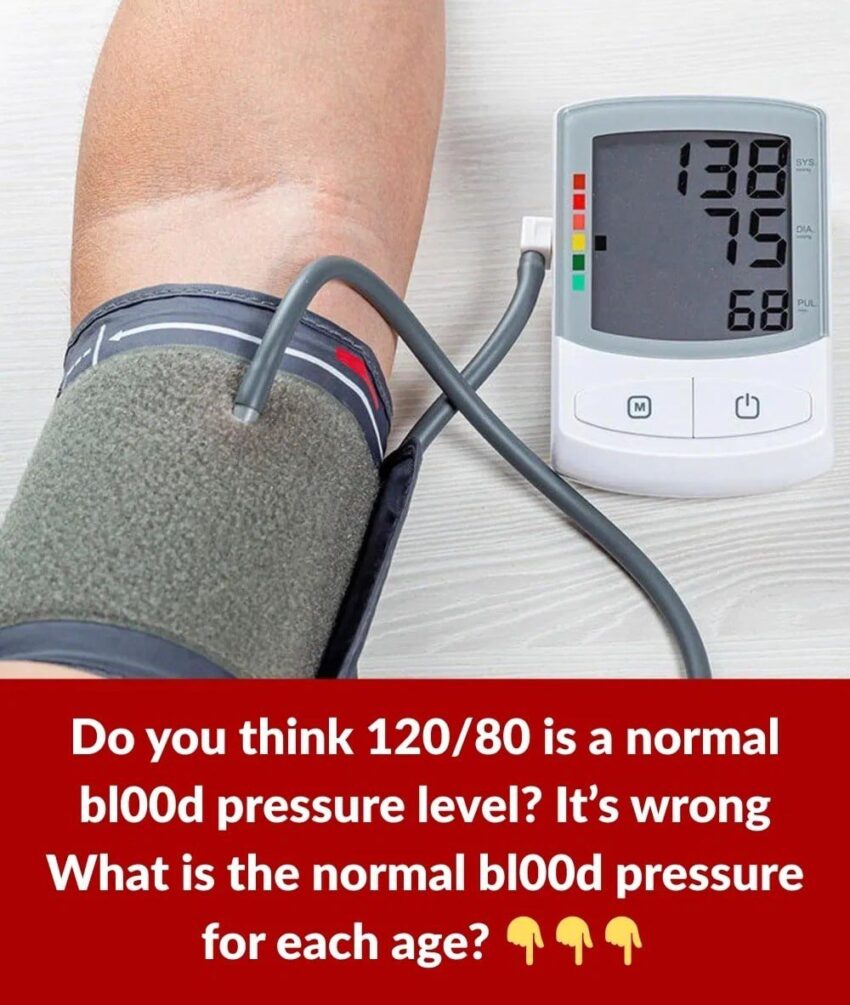
The idea that blood pressure has a very different “normal” for every age is a bit misleading. In reality, doctors use mostly the same healthy range for adults, regardless of age—because higher numbers always increase risk over time.
🩺 What is “normal” blood pressure?
Blood pressure is measured in mmHg and written as systolic/diastolic (e.g., 120/80).
General adult categories (based on guidelines):
- Normal: less than 120 / less than 80
- Elevated: 120–129 / less than 80
- High (hypertension): 130/80 or higher
This applies broadly to adults, not a different “normal” for each decade of life.
👶 Blood pressure by age (approximate trends)
👶 Children (varies by age, height, and sex)
- Typically lower than adults
- Pediatricians use charts rather than one fixed number
🧑 Young adults (18–39)
- Ideal: around 110–120 / 70–80
- Early high readings shouldn’t be ignored—they can track into later life
🧔 Middle-aged adults (40–59)
- Often starts creeping up
- Still, the target remains below 130/80
👴 Older adults (60+)
- Blood pressure tends to rise due to stiffening arteries
- But it’s not considered “normal” just because of age
Doctors may individualize treatment goals, but uncontrolled high blood pressure still increases risk of:
- stroke
- Heart disease
- Kidney problems
⚠️ Common mistake
Many people think:
“My BP is high, but it’s normal for my age.”
That’s not quite true. Age increases risk—but high blood pressure is still something to manage, not accept.
🧠 Why this matters
Long-term high blood pressure (known as hypertension) often has no symptoms, but silently damages:
- Blood vessels
- Heart
- Brain
🧭 Bottom line
- There isn’t a completely different “normal” BP for each age
- For most adults, under 120/80 is ideal, under 130/80 is acceptable
- Higher numbers should be monitored and managed, not dismissed as aging
If you want, tell me your age and recent readings, and I can help you interpret them more precisely.
