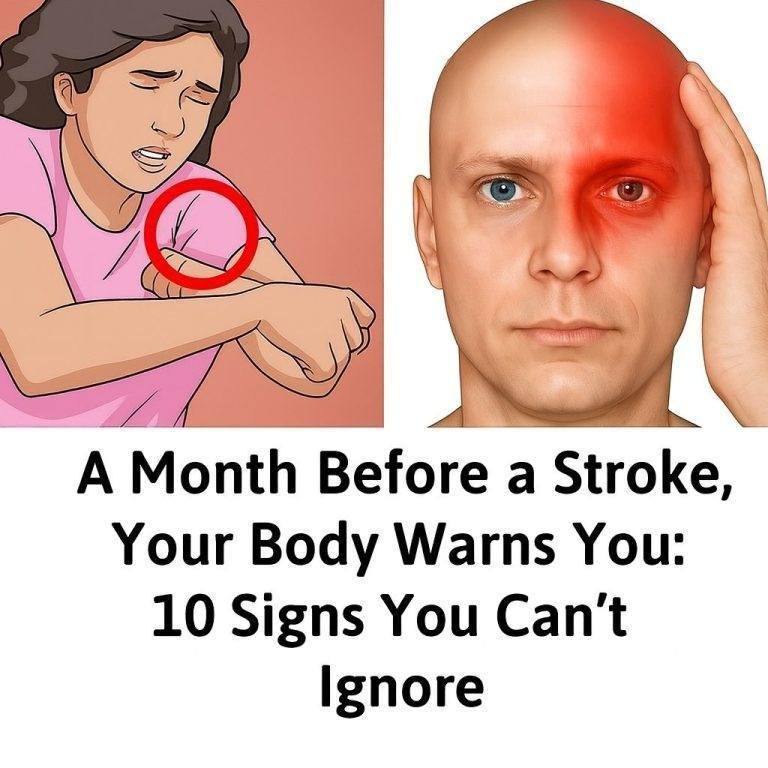
The idea that your body gives a clear, predictable set of warnings a full month before a stroke is a bit misleading. Strokes can sometimes be preceded by warning signs—but they’re often sudden, and when early symptoms do appear, they’re usually hours, days, or occasionally weeks before, not reliably a full month.
What does matter is recognizing real early warning signs, especially those linked to a Transient Ischemic Attack (TIA)—often called a “mini-stroke.” A TIA is a major red flag that a full stroke could follow.
Here are important signs you should never ignore:
🚨 Sudden neurological symptoms (most critical)
These can happen briefly and go away, but still require urgent care:
- Weakness or numbness on one side of the body (face, arm, or leg)
- Trouble speaking or understanding speech (slurred or confused words)
- Sudden vision problems in one or both eyes
- Dizziness, loss of balance, or coordination
- Severe, unexplained headache
These are classic stroke symptoms and are often summarized by FAST:
- Face drooping
- Arm weakness
- Speech difficulty
- Time to call emergency services
⚠️ Possible earlier warning patterns
Some people report symptoms in the days or weeks before a stroke, including:
- Brief episodes of numbness or weakness that resolve
- Temporary confusion or trouble speaking
- Short-lived vision loss (like a curtain coming down over one eye)
- Frequent unexplained headaches
- Sudden spikes in blood pressure
❤️ Risk factors that act like “silent warnings”
Even without symptoms, these greatly increase stroke risk:
- High blood pressure
- Diabetes
- Smoking
- High cholesterol
- Irregular heartbeat (like atrial fibrillation)
- Obesity and inactivity
⚠️ Important reality check
There is no medically established list of “10 guaranteed signs one month before a stroke.” Content like that is often exaggerated or oversimplified.
✅ What you should do
- Treat any stroke-like symptom as an emergency—even if it goes away
- Get regular checkups if you have risk factors
- Don’t ignore brief or mild neurological symptoms
If you want, I can break down how to reduce your stroke risk or help you assess your personal risk factors.
