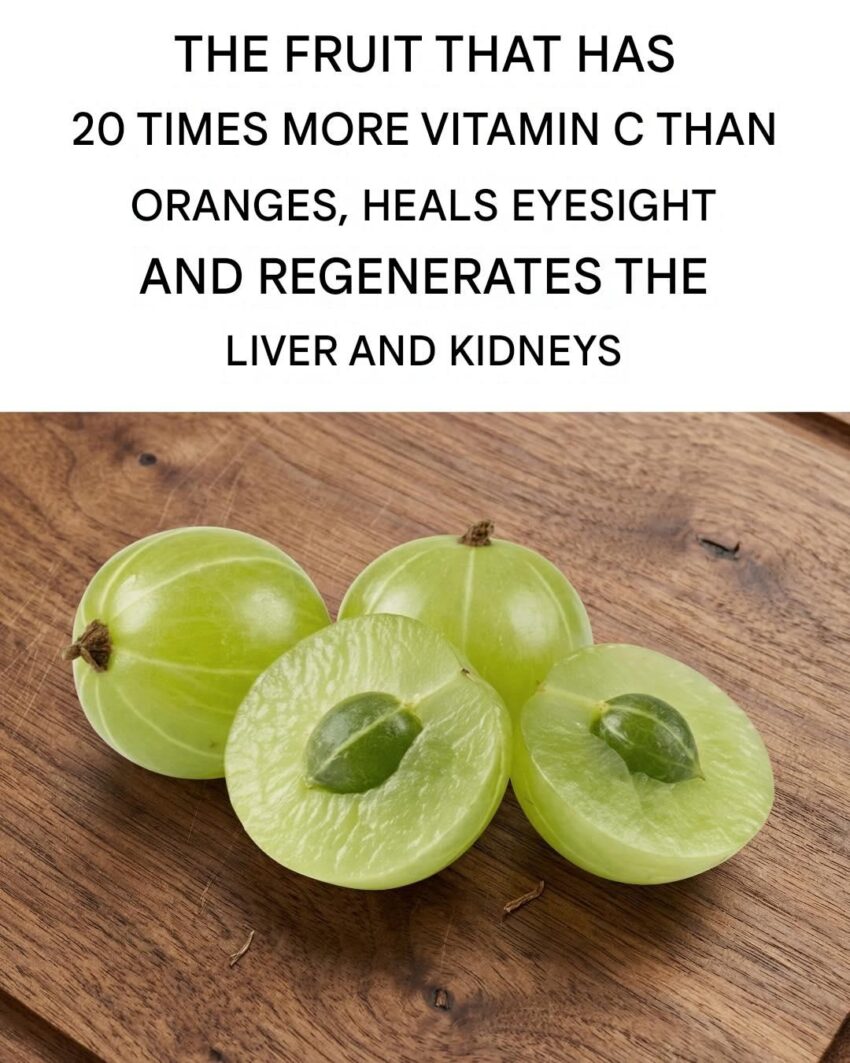
There isn’t a single fruit that truly “heals eyesight” or “regenerates the liver and kidneys” in the way those claims are usually shared online. That part is misinformation. No fruit can repair organs like that.
What is real behind your description is the vitamin C comparison.
The fruits most commonly associated with “~20× more vitamin C than oranges” are:
Acerola cherry
Acerola is one of the richest natural sources of vitamin C. It can contain roughly 30–100 times more vitamin C than oranges, depending on ripeness and variety. It’s often used in supplements for immunity and antioxidant support.
Kakadu plum
This Australian native fruit is even more extreme—often cited as the highest natural vitamin C source in the world, sometimes reaching 50–100× more than oranges.
Camu camu
A rainforest fruit from the Amazon with very high vitamin C levels (commonly around 30–60× oranges).
What vitamin C actually does (scientifically)
Vitamin C helps with:
- Immune system support
- Collagen production (skin, gums, blood vessels)
- Antioxidant protection
- Helping the body absorb iron
It does not:
- Regenerate the liver or kidneys
- “Repair” damaged organs
- Restore eyesight (though it may help general eye health indirectly via antioxidants)
Bottom line
The “20× vitamin C fruit” claim is loosely pointing to acerola cherry, kakadu plum, or camu camu—but the healing/regeneration claims are exaggerated and not supported by medical evidence.
If you want, I can compare these fruits in terms of availability, taste, and whether they’re actually worth using vs normal oranges or supplements.
