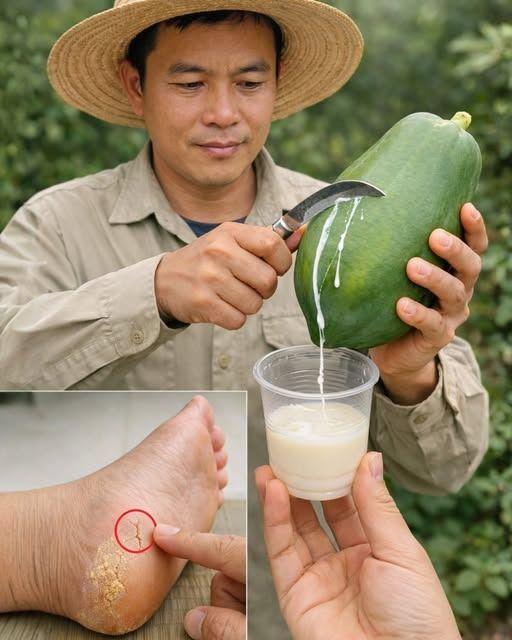
…because papaya sap (the milky latex from unripe fruit and stems) is actually packed with enzymes—especially papain and chymopapain—that make it surprisingly useful in both traditional and modern applications.
Here’s what makes it interesting:
1. Natural meat tenderizer
Papain breaks down proteins, which is why papaya sap has long been used to soften tough meat. Today, purified papain is still used in commercial food tenderizers.
2. Digestive aid
Papain can help break down dietary proteins in the stomach. That’s why it shows up in some digestive enzyme supplements.
3. Medical and industrial uses
It’s used in wound debridement (helping remove dead tissue), in brewing to prevent haze in beer, and even in some cosmetics for gentle exfoliation.
4. Traditional medicine uses
In several cultures, the latex has been used for treating skin issues, parasites, and inflammation—though not all of these uses are strongly supported by modern clinical evidence.
But there’s a catch:
Fresh papaya sap is also irritating and potentially allergenic. It can cause skin burns, eye irritation, or allergic reactions—especially in people sensitive to latex. That’s why it’s usually processed or purified before use.
So while the fruit gets all the attention, the sap is basically the “hidden chemical toolkit” of the papaya plant—powerful, useful, but not something to handle carelessly.
