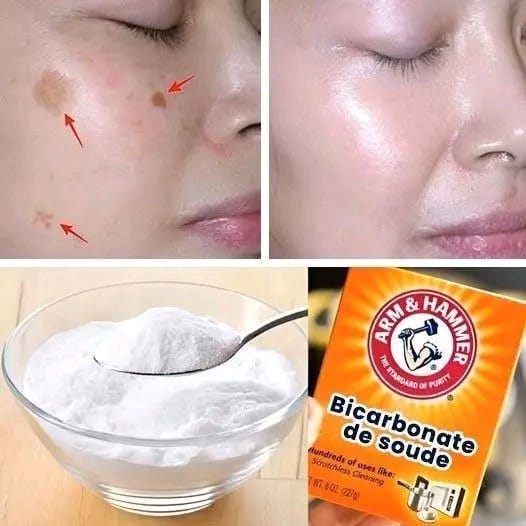
Baking soda is often promoted in DIY skincare routines, but it’s important to be realistic: there’s no strong scientific evidence that it can erase age spots, and it can sometimes irritate or damage the skin barrier because it’s alkaline (your skin is naturally slightly acidic).
That said, if you still want to use it cautiously as part of a gentle routine, here are 4 safer ways people typically use baking soda-based mixtures—plus how to do them in a way that minimizes risk.
1) Baking soda + water gentle exfoliating paste
How it’s used:
- Mix 1 teaspoon baking soda with a few drops of water to form a thin paste.
- Gently apply to affected areas for 10–20 seconds.
- Rinse immediately with lukewarm water.
Why people try it:
It acts as a mild physical exfoliant, helping remove dead skin cells that can make dark spots look more noticeable.
Important caution:
Do not scrub hard or leave it on. Overuse can cause redness and dryness, which may actually worsen pigmentation over time.
2) Baking soda + honey soothing mask
How it’s used:
- Mix 1 teaspoon baking soda with 1–2 teaspoons honey.
- Apply for 5–10 minutes max, then rinse.
Why people try it:
Honey adds moisture and mild soothing properties to balance baking soda’s harshness.
Important caution:
Still not ideal for sensitive skin. Stop if you feel tingling or burning.
3) Baking soda + lemon “spot treatment” (NOT recommended for most skin types)
How it’s used:
- A tiny pinch of baking soda mixed with a few drops of lemon juice.
- Dab only on spots, rinse after 1–2 minutes.
Why people try it:
Lemon juice contains citric acid and vitamin C, which can help brighten skin.
Important caution (very important):
This combination can cause irritation and photosensitivity (increased risk of sun damage). Dermatologists generally advise against using lemon on skin.
4) Baking soda bath soak (for overall skin smoothing)
How it’s used:
- Add 2–3 tablespoons baking soda to a warm bath.
- Soak for 10–15 minutes.
Why people try it:
It may temporarily soften skin texture and reduce dryness, making spots appear less noticeable.
Important caution:
This won’t remove age spots and is only a temporary cosmetic effect.
The truth about age spots (important)
Age spots (sun spots or hyperpigmentation) are caused by UV exposure and melanin buildup. Baking soda cannot remove pigment from deeper skin layers.
More effective, evidence-based options include:
- Daily sunscreen (SPF 30+ or higher)
- Vitamin C serums
- Retinoids
- Niacinamide
- Professional treatments like chemical peels or laser therapy
Bottom line
Baking soda can act as a mild exfoliant, but it is not a reliable or dermatologist-recommended treatment for age spots. If used at all, it should be occasional and very gentle—otherwise it may do more harm than good.
If you want, I can suggest a simple skincare routine that actually targets age spots safely and shows results over time.
