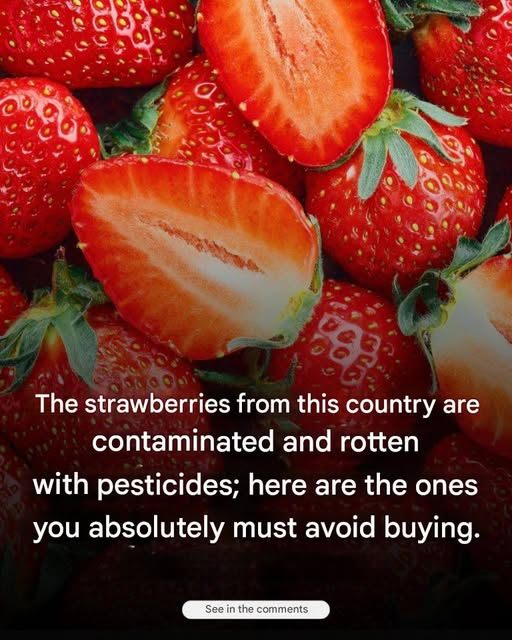
There isn’t one single “hidden truth” about strawberries—but there are a few lesser-known realities that tend to get exaggerated online and mixed together into sensational claims. Here’s what’s actually going on.
First, strawberries are among the most pesticide-prone fruits in conventional farming. Not because they’re “unsafe by default,” but because their soft skin, ground-level growth, and long growing season make them vulnerable to insects and fungal diseases. As a result, they often appear on “high pesticide residue” lists when grown conventionally. That said, regulatory agencies set limits far below levels considered harmful, and washing them reduces residues further. Organic strawberries reduce synthetic pesticide use, but they’re not automatically “chemical-free” either.
Second, the shiny coating you sometimes see on strawberries isn’t wax. Unlike apples, strawberries don’t get waxed after harvest. Their natural gloss comes from tiny surface structures that reflect light. If they look unusually shiny, it’s usually due to freshness, moisture, or packaging—not artificial coating.
Third, strawberries are extremely perishable. A big “hidden truth” of the supply chain is that a lot of what you see in supermarkets is bred not just for sweetness, but for durability—firmness, shelf life, and transport resistance. That can sometimes come at the expense of aroma and flavor compared to local or freshly picked berries.
Fourth, there’s a common myth about “genetically modified strawberries.” Commercial GMO strawberries are not currently sold in most markets. Modern varieties are developed through traditional crossbreeding, not genetic engineering, even though the fruit has been selectively bred heavily over time.
Finally, strawberries are nutritionally underrated. They’re low in calories, high in vitamin C, fiber, and antioxidants, and can support heart and metabolic health when part of a balanced diet.
So the “hidden truth” isn’t a single shocking secret—it’s that strawberry is heavily shaped by farming practices, supply chains, and marketing myths more than anything inherently dangerous or unnatural. If anything, the real story is about how industrial agriculture and consumer expectations shape what ends up in your hand.
