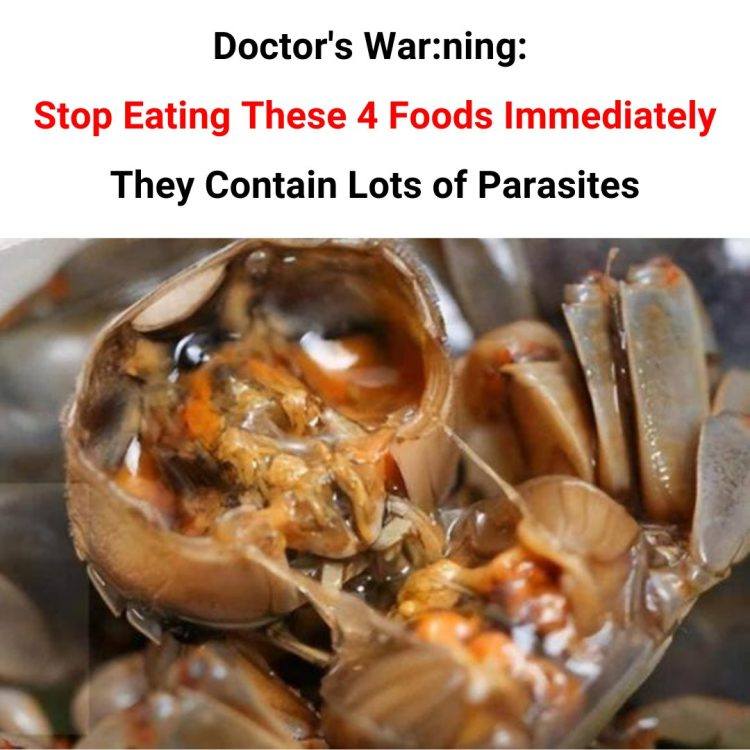
Headlines like “Doctors warn: limit eating these 4 foods immediately, they contain a lot of parasites” are spreading online, but they’re sensationalized — often meant to grab attention rather than reflect an actual medical directive. Here’s what’s really going on based on food safety science: (The Environmental Literacy Council)
🧬 Truth Behind the Claim
Yes — certain foods can carry parasites if they are raw, undercooked, or contaminated, but reputable health authorities don’t typically say “stop eating them immediately forever.” They focus on safe preparation and handling, not fear. (The Environmental Literacy Council)
🥩 Foods That Can Carry Parasites if Handled Improperly
1) Undercooked or Raw Meats (Beef, Pork, Game)
These can harbor tapeworm larvae and other parasites if not cooked properly. Thorough cooking or freezing significantly reduces this risk. (The Environmental Literacy Council)
2) Raw or Undercooked Fish & Seafood
Raw fish dishes such as sushi, sashimi, ceviche, or lightly smoked fish can contain parasites like Anisakis or tapeworm larvae if not frozen and processed according to safety standards. (Healthline)
3) Unwashed Fresh Produce
Vegetables and fruits grown in contaminated soil or irrigated with unsafe water can carry parasite eggs or cysts — which is why washing produce thoroughly is recommended. (The Environmental Literacy Council)
4) Raw Dairy Products
Unpasteurized milk and cheeses can also carry parasites (and other pathogens) if the animals or processing environment aren’t clean. (The Environmental Literacy Council)
🧠 What Experts Actually Advise
Instead of eliminating these foods entirely, health organizations emphasize safe handling and preparation:
- Cook meats and seafood thoroughly to recommended internal temperatures.
- Freeze raw fish properly (as is required for sushi-grade fish) to kill parasites.
- Wash produce under clean running water before eating.
- Avoid unpasteurized dairy products unless they’re from trusted, inspected sources. (İstinye Üniversitesi)
This approach reduces parasite risk dramatically without cutting major food groups out of your diet.
❗ What the Viral Posts Often Get Wrong
🔹 They imply these foods “contain a lot of parasites all the time” — that’s not accurate. Parasite presence depends on source, handling, and preparation. (The Environmental Literacy Council)
🔹 They frame it as an emergency warning — health professionals emphasize risk reduction through proper cooking and hygiene, not blanket avoidance. (İstinye Üniversitesi)
🧠 Bottom Line
- Parasite risks from food are real, but they’re linked to raw or poorly prepared foods rather than everyday eating in general. (The Environmental Literacy Council)
- With proper cooking, freezing, and cleaning, those risks can be minimized, which is what health experts recommend. (İstinye Üniversitesi)
- Sensational headlines don’t reflect nuanced food safety guidance from doctors and public health authorities.
If you’d like, I can summarize specific parasite risks per food type and how to prepare them safely so you know exactly what to watch for and how to protect yourself 👍.
