Here’s a full, professional article for your headline:
How to Get a Deep Piriformis Stretch to Eliminate Back, Hip, Glutes, and Leg Pain
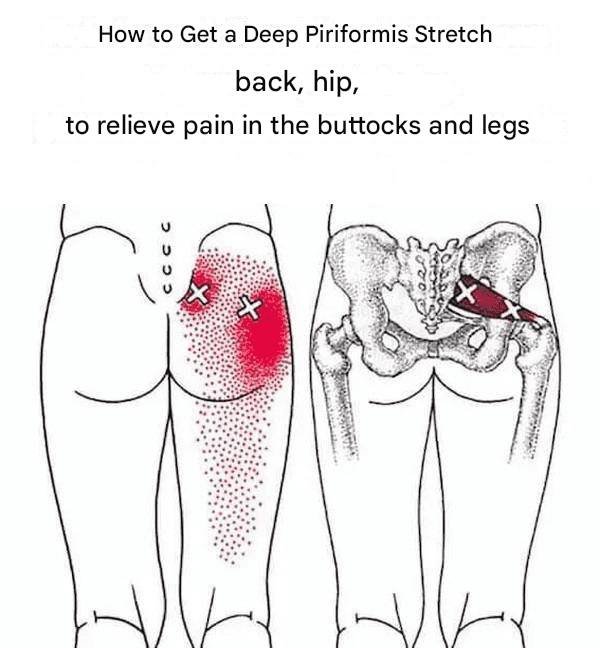
Tightness in the piriformis muscle—a small, deep muscle located in the buttocks—can cause pain that radiates from the lower back through the hips, glutes, and even down the legs. This discomfort, often referred to as piriformis syndrome, is common in people who sit for long periods, perform repetitive lower-body movements, or experience muscular imbalances. The good news is that a few targeted stretches can provide deep relief and improve mobility.
Understanding the Piriformis Muscle
The piriformis connects the lower spine to the top of the femur (thigh bone) and plays a key role in hip rotation and stability. When tight or inflamed, it can irritate the sciatic nerve, causing pain, numbness, or tingling that radiates down the leg. Stretching and releasing this muscle can reduce discomfort and improve overall lower-body function.
Deep Piriformis Stretch Techniques
1. Seated Figure-Four Stretch
- Sit on a chair with feet flat on the ground.
- Cross your right ankle over your left knee, forming a “figure-four.”
- Gently lean forward from the hips while keeping your back straight until you feel a stretch in the right glute and hip.
- Hold for 30–60 seconds, then switch sides.
2. Supine Piriformis Stretch
- Lie on your back with knees bent and feet flat.
- Cross your right ankle over your left knee.
- Grab the back of your left thigh and gently pull it toward your chest.
- Hold for 30–60 seconds, focusing on deep breathing.
- Repeat on the other side.
3. Pigeon Pose (Yoga-Inspired Stretch)
- Start in a plank or downward dog position.
- Bring your right knee forward and place it behind your hands, angling the shin slightly.
- Extend your left leg straight back, keeping hips square.
- Lean forward gently, resting on your forearms if possible.
- Hold for 30–60 seconds, then switch sides.
4. Standing Piriformis Stretch
- Stand and cross your right ankle over your left knee, forming a “figure-four” while standing.
- Sit back slightly as if lowering into a chair, keeping your torso tall.
- Hold for 20–30 seconds, then switch sides.
Tips for Maximum Relief
- Warm up first: Gentle walking or leg swings increase blood flow to the area.
- Breathe deeply: Relaxing your breath helps release tension in the muscle.
- Consistency is key: Daily stretching can prevent recurring tightness.
- Combine with strengthening: Strengthening the glutes and core supports proper alignment and reduces strain on the piriformis.
When to Seek Professional Help
If you experience severe pain, numbness, or weakness in the legs, or if symptoms persist despite regular stretching, consult a healthcare professional. Physical therapists can provide targeted exercises, manual therapy, and advice tailored to your body.
I can also create a quick “at-home routine” version with illustrations or step-by-step visuals that would make this more actionable for readers. Do you want me to do that?
