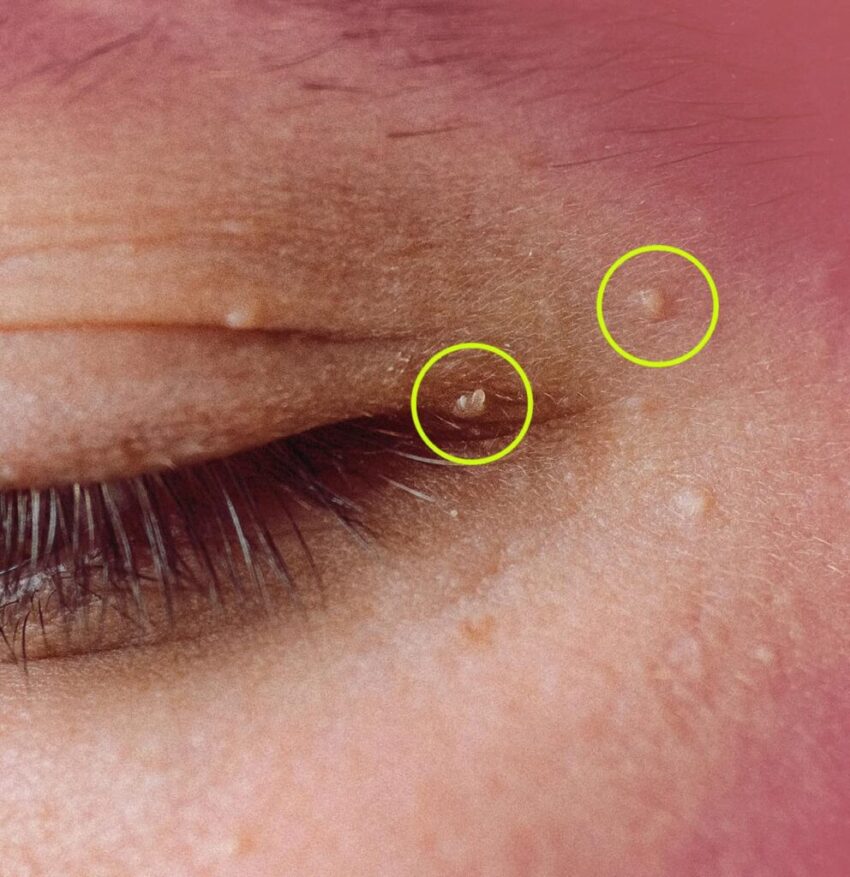
Milia are tiny, hard, white bumps that appear on the skin, usually around the eyes, nose, and cheeks. They’re essentially small cysts formed when keratin (a protein in skin) gets trapped under the surface. They’re harmless but can be frustrating because they’re stubborn and don’t go away on their own quickly. Here’s a comprehensive guide to getting rid of them safely:
1. Do Not Pick or Squeeze
- Milia are deep under the skin, so trying to pop them can cause:
- Scarring
- Infection
- Further irritation
Think of them like little pearls under your skin—forcing them out usually backfires.
2. Exfoliation
Gently removing dead skin can help prevent and reduce milia:
- Chemical exfoliants: Products containing AHAs (glycolic acid, lactic acid) or BHAs (salicylic acid) can loosen the skin surface.
- Physical exfoliants: Avoid harsh scrubs. Use soft brushes or mild scrubs sparingly.
⚠️ Avoid aggressive scrubbing—it can worsen the problem.
3. Topical Retinoids
- Retinoid creams (like adapalene or tretinoin) promote skin cell turnover, helping trapped keratin surface naturally.
- Use as directed; start slowly to avoid irritation.
4. Professional Extraction
If milia persist:
- Dermatologist removal: They can safely extract them using a sterile needle or a small incision.
- Laser or chemical peel: Sometimes used for clusters of milia.
💡 Never attempt at-home needle extraction—it increases risk of infection and scarring.
5. Prevent Future Milia
- Avoid heavy creams or oily products around eyes.
- Use non-comedogenic moisturizers.
- Cleanse skin gently but regularly.
- Wear sunscreen—sun damage can thicken skin, making milia more likely.
6. Home Remedies (Optional & Mild)
- Steam your face: Opens pores gently.
- Honey masks: Mild antibacterial properties; helps with gentle exfoliation.
- Avoid steroid creams: They can increase milia risk.
When to See a Dermatologist
- Milia persist for months or appear in large clusters.
- Skin becomes red, painful, or infected.
- You want safe, fast removal without scarring.
If you want, I can also make a step-by-step at-home care routine specifically for milia-prone skin that combines cleansing, exfoliation, and prevention strategies. It’s like a mini skin plan.
Do you want me to create that?
