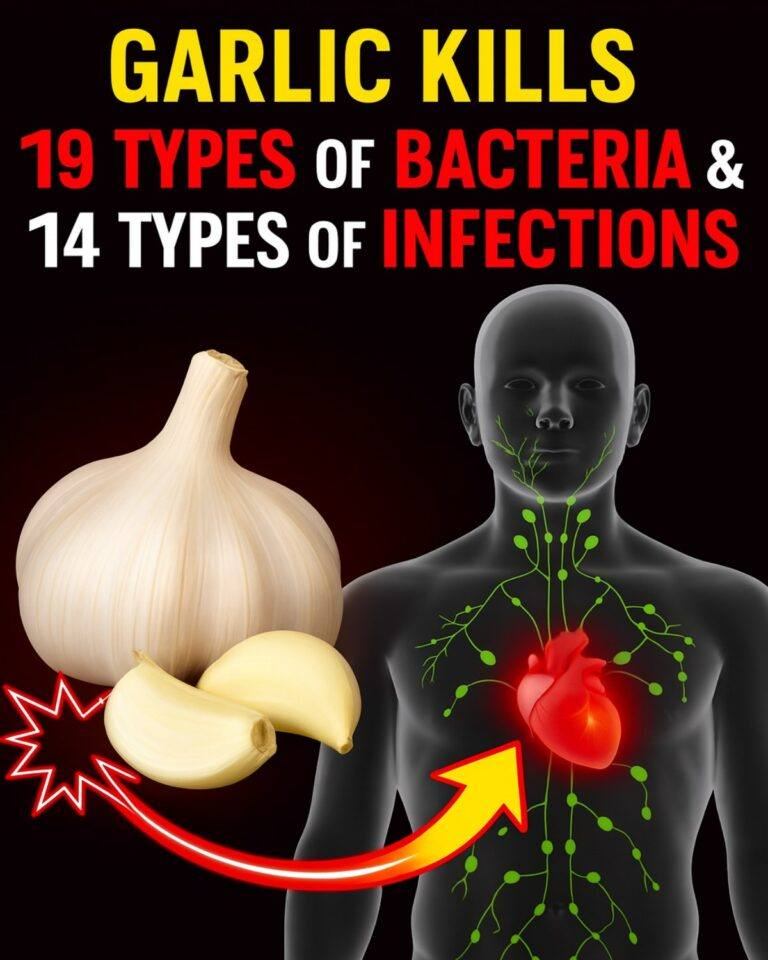
Garlic and Its Antimicrobial Properties
1. Active Compound
-
Garlic contains allicin, which is produced when garlic is crushed or chopped.
-
Allicin has been shown in lab studies to inhibit the growth of certain bacteria, fungi, and viruses.
2. What Garlic Can Affect
Research suggests garlic may help fight or slow the growth of:
-
Bacteria: E. coli, Salmonella, Staphylococcus aureus, Helicobacter pylori (lab studies)
-
Fungi: Candida albicans
-
Viruses: Some studies show effects against influenza and cold viruses (mainly in lab settings)
3. What the “14 Types of Bacteria and 13 Infections” Claim Means
-
This number comes from laboratory studies, not clinical trials in humans.
-
Garlic is not a substitute for antibiotics or proper medical treatment.
-
Effectiveness in the body is lower than in test tubes because allicin is unstable and can break down in digestion.
4. How to Get the Most Benefits
-
Crush or chop fresh garlic and let it sit for 10–15 minutes before cooking—this maximizes allicin formation.
-
Eat it raw if possible (e.g., in salad dressings, dips, or spreads).
-
Supplements exist, but effectiveness varies widely.
5. Safety Notes
-
Garlic is generally safe in food amounts.
-
Large quantities can cause stomach upset, heartburn, or interact with blood-thinning medications.
-
Always consult a doctor if using garlic for medicinal purposes, especially alongside prescriptions.
Bottom Line:
Garlic does have antibacterial, antifungal, and antiviral properties, but the claim that it kills exactly 14 bacteria and 13 infections is an exaggeration. It’s a supportive, natural food, not a cure-all.
If you want, I can make a step-by-step guide for a garlic-based natural remedy that supports immunity and gut health safely.
Do you want me to do that?
