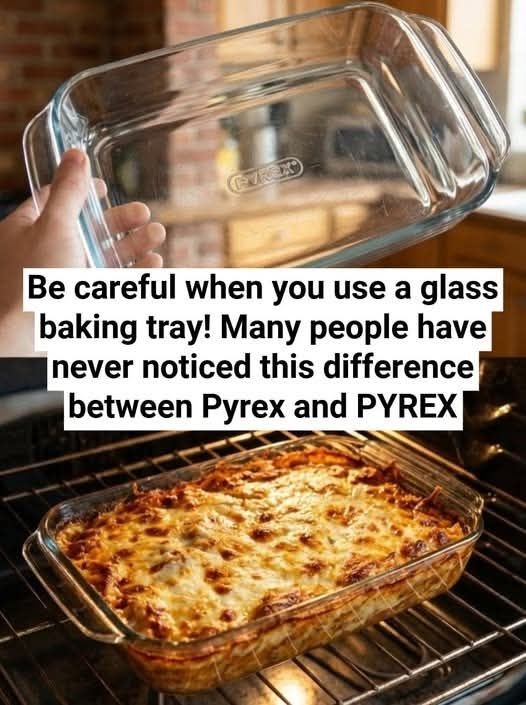
Here’s a clear, simple breakdown of the key differences between the two main kinds of Pyrex products people refer to — historically versus modern versions:
🔥 1. PYREX (All‑Caps) — Borosilicate Glass
This is the original Pyrex material and still used in some regions/products.
🧪 Material
- Made from borosilicate glass, which includes boron oxide in the mix. (Flavor365)
📌 Key Properties
- Excellent thermal shock resistance — much better at handling quick temperature changes (e.g., from fridge to oven). (Flavor365)
- Lower expansion with heat — less likely to crack when heated unevenly. (safecoze.com)
- Often used in lab glassware and high‑end cookware. (Flavor365)
👀 How to Identify
- Brand is printed in all capital letters: “PYREX.” (Flavor365)
👍 Pros
- Great for going from cold to hot environments.
- Superior chemical and thermal durability. (Flavor365)
👎 Cons
- More brittle — can chip or break if dropped. (Flavor365)
🥣 2. pyrex (Lowercase) — Tempered Soda‑Lime Glass
This is what most modern consumer Pyrex cookware (especially in the U.S. and many other regions) is made from.
🧱 Material
- Made from tempered soda‑lime glass, similar to common window glass but strengthened by heat treatment. (Flavor365)
📌 Key Properties
- Better impact resistance — less likely to break when bumped or dropped. (Flavor365)
- Higher thermal expansion, meaning it’s more sensitive to sudden temperature changes. (Flavor365)
👀 How to Identify
- Brand appears in lowercase letters: “pyrex.” (Flavor365)
👍 Pros
- More durable against physical shocks.
- Often more affordable. (Flavor365)
👎 Cons
- Less resistant to rapid temperature shifts — can shatter if suddenly heated or cooled. (Flavor365)
🔍 Quick Side‑by‑Side Comparison
| Feature | PYREX (Borosilicate) | pyrex (Soda‑Lime) |
|---|---|---|
| Material | Borosilicate glass | Tempered soda‑lime glass |
| Heat/thermal shock resistance | High (better) | Moderate — lower |
| Impact/dropping strength | Moderate | High |
| Typical marking | “PYREX” (caps) | “pyrex” (lowercase) |
| Best for | Oven‑to‑fridge baking | Everyday storage & baking |
| Typical regions | Europe, vintage pieces | US, Asia, Latin America |
🧠 Bottom Line
- PYREX (caps / borosilicate) = better with rapid temperature changes (ideal for baking/cooking). (Flavor365)
- pyrex (lowercase / soda‑lime) = better with impact but needs more careful heating/cooling to avoid breakage. (Flavor365)
If you want, I can also tell you how to safely use each type in your kitchen (like best practices for oven, microwave, fridge, and cleaning). Just ask!
