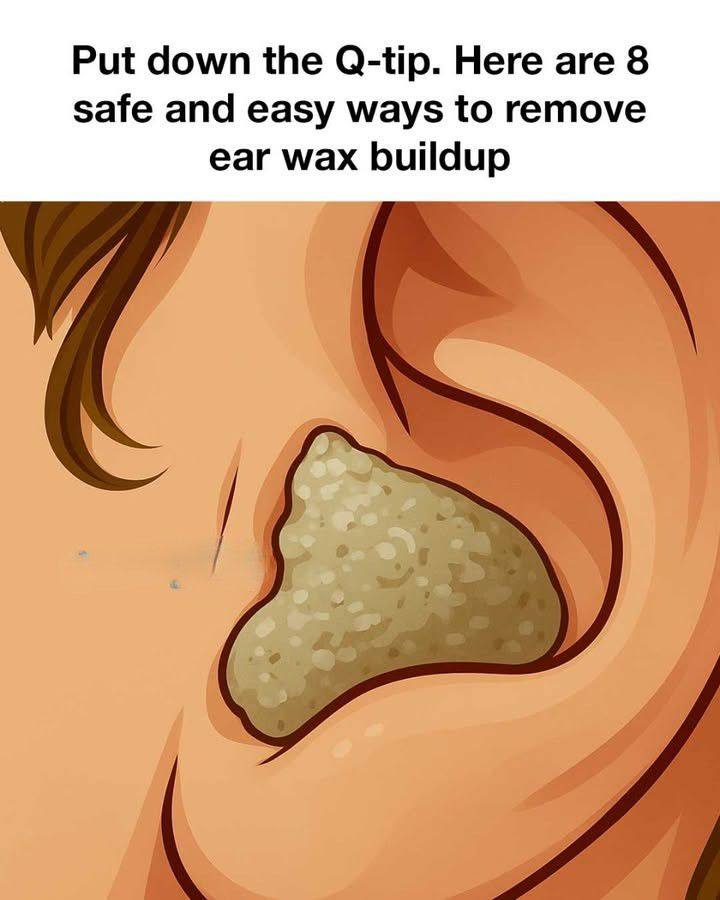
Put Down the Q-Tip: 8 Safe and Easy Ways to Remove Ear Wax Buildup
Earwax (cerumen) isn’t dirty — it protects your ears by trapping dust, debris, and bacteria. Most of the time, your ears clean themselves naturally. But when wax builds up, it can cause:
- Muffled hearing
- Ear fullness
- Mild discomfort
- Ringing in the ears
- Dizziness (in rare cases)
Using cotton swabs (Q-tips) often pushes wax deeper and may injure the ear canal. Here are safer alternatives.
1. Do Nothing (Let the Ear Self-Clean)
Your ears are designed to move wax outward naturally through jaw movement (talking, chewing).
If you don’t have symptoms, the safest method is often:
- Leave it alone.
- Wipe only the outer ear with a damp cloth.
2. Warm Water Rinse (Gentle Shower Method)
In the shower:
- Let warm (not hot) water gently run into your ear.
- Tilt your head to drain it.
- Dry the outer ear carefully.
Do not use strong water pressure.
3. Saline Solution
Saline helps soften hardened wax.
How to use:
- Tilt head sideways.
- Place a few drops in the ear.
- Wait 3–5 minutes.
- Tilt head to drain.
This can be done once daily for several days.
4. Hydrogen Peroxide (Diluted)
A 3% hydrogen peroxide solution can help break down wax.
How to use:
- Mix equal parts peroxide and water.
- Use a dropper to place a few drops in the ear.
- You may hear fizzing.
- Drain after a few minutes.
Do not use if you have ear pain, infection, or a perforated eardrum.
5. Mineral Oil or Baby Oil
Oil softens dry, impacted wax.
Steps:
- Warm slightly (to body temperature).
- Add 2–3 drops.
- Let sit for 5–10 minutes.
- Drain.
Repeat daily for a few days if needed.
6. Over-the-Counter Ear Drops
Many pharmacies sell cerumen-softening drops containing:
- Carbamide peroxide
- Glycerin
- Saline blends
Follow package instructions carefully.
7. Bulb Syringe Irrigation (With Caution)
After softening wax:
- Use a rubber bulb syringe with warm water.
- Gently flush.
- Tilt head to drain.
Never use force. Stop if you feel pain or dizziness.
8. Professional Removal (Safest for Heavy Buildup)
If symptoms persist, see a healthcare provider. They may use:
- Microsuction
- Manual removal with special tools
- Controlled irrigation
This is the safest option for severe impaction.
What NOT to Do
Avoid:
- Cotton swabs inside the ear canal
- Hairpins or sharp objects
- Ear candles (not proven safe or effective)
- High-pressure water devices
These can push wax deeper or damage the eardrum.
When to See a Doctor
Seek medical care if you have:
- Severe ear pain
- Sudden hearing loss
- Persistent ringing
- Drainage
- Vertigo
- A history of eardrum rupture
The Bottom Line
Most earwax does not need removal. If buildup causes symptoms, gentle softening and safe rinsing methods work well. Avoid inserting objects into the ear canal — that’s how most problems begin.
If you want, I can also explain how to tell the difference between simple wax buildup and an ear infection.
