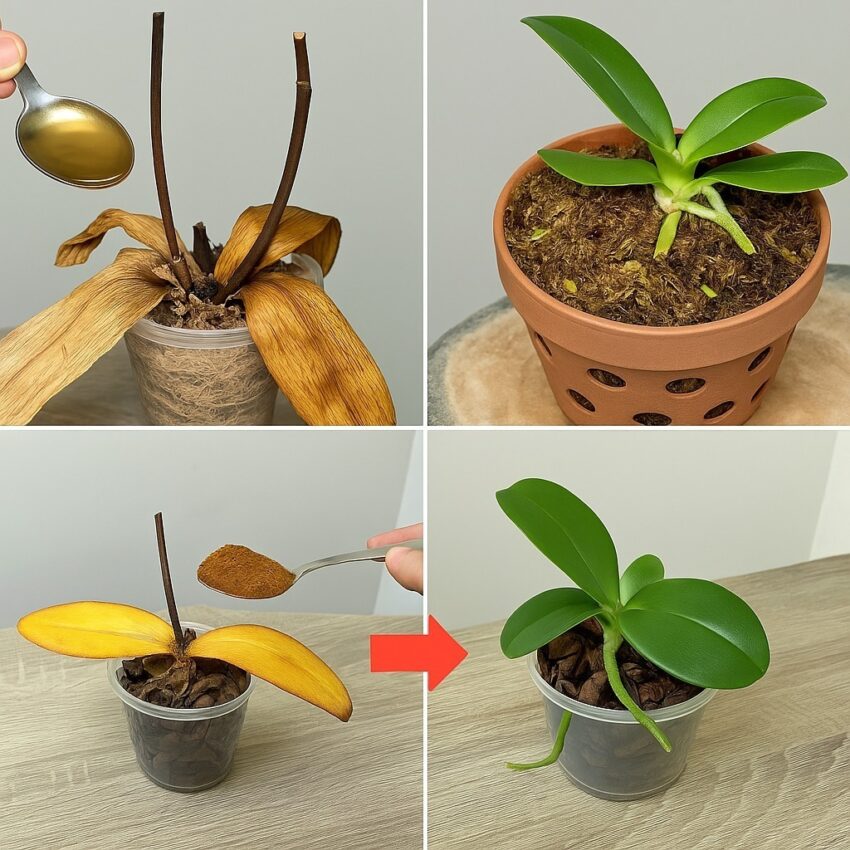
Ah! Claims like “sprinkle 1 spoon on dead orchid roots and it revives the plant to bloom all year” are classic overhyped gardening headlines. Let’s break this down carefully and realistically.
Reality about “dead” orchid roots
- Orchids are resilient, but truly dead roots cannot be revived.
- What often looks dead may just be dormant, dehydrated, or stressed roots, which can sometimes recover with proper care.
What might the “special spoon” really be
Common home remedies for orchids include:
- Cinnamon powder
- Used as a mild antifungal when trimming rotted roots.
- Helps prevent infection after pruning, but doesn’t magically revive dead tissue.
- Activated charcoal
- Improves potting mix drainage and keeps roots healthy.
- Fertilizer or orchid-specific nutrients
- Boosts growth in healthy roots but cannot regenerate truly dead roots.
- Hydrogen peroxide solution (diluted)
- Sometimes used to clean and disinfect roots, supporting recovery of stressed roots.
How to realistically revive an orchid
- Inspect the roots
- Trim all black, mushy, or rotten roots using sterile scissors.
- Use antifungal powder if desired
- Cinnamon or charcoal dust can help prevent infection.
- Repot in fresh orchid medium
- Use bark, moss, or a well-draining orchid mix.
- Water carefully
- Only when roots are dry; avoid overwatering.
- Provide light and humidity
- Bright, indirect light and moderate humidity encourage recovery.
Blooming all year round?
- Most orchids have specific flowering cycles (seasonal).
- You can sometimes encourage repeat blooming with proper care and temperature/light adjustments, but there’s no powder that guarantees year-round flowers.
💡 Bottom line: Sprinkling a spoon of anything will not revive truly dead roots or make orchids bloom endlessly. What works is pruning, disinfecting, proper potting, and patient care.
If you want, I can make a step-by-step “revive your struggling orchid” guide that actually works and can help it flower reliably in its natural cycle.
Do you want me to do that?
