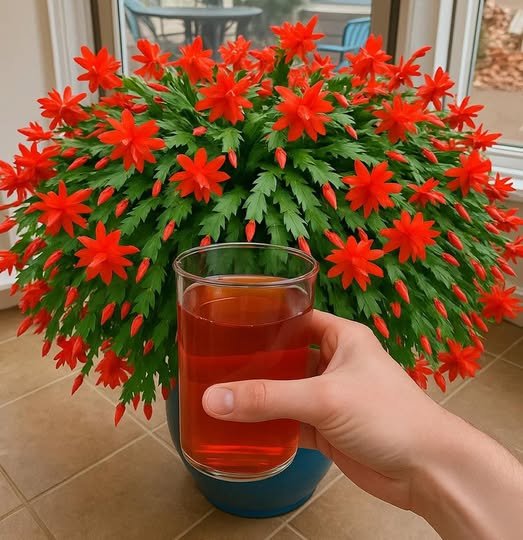
Here’s a detailed guide on how to make your Christmas cactus bloom more reliably — even aiming for multiple blooms throughout the year. While these plants naturally bloom in winter, you can manipulate light, temperature, and care to encourage more frequent flowering.
1. Understand the Bloom Cycle
- Christmas cacti (Schlumbergera species) are triggered to bloom by shorter daylight hours and cooler temperatures.
- They are photoperiod-sensitive: about 12–14 hours of darkness for 6 weeks is needed to initiate flowering.
- Once buds appear, the plant needs stable conditions to develop flowers properly.
2. Adjust Light Exposure
- Place the plant in bright but indirect light. Too much direct sun can damage the leaves.
- During the bud formation period, ensure 12–14 hours of uninterrupted darkness each night for about 6 weeks.
- After buds form, natural room light is fine.
3. Temperature Control
- Ideal blooming temperature: 60–70°F (15–21°C) during the day, slightly cooler at night (50–55°F / 10–13°C) for bud initiation.
- Avoid drafts, sudden temperature changes, or heating vents, which can cause buds to drop prematurely.
4. Proper Watering
- Water moderately — let the top inch of soil dry out between watering.
- Overwatering can cause root rot, while underwatering stresses the plant.
- Reduce watering slightly when buds are forming to encourage flowering.
5. Fertilization
- Feed with a balanced, water-soluble fertilizer (like 10-10-10 or 20-20-20) every 2–4 weeks during the growing season (spring through early fall).
- Avoid fertilizing during the bud-formation phase, as excess nitrogen can produce more leaves but fewer flowers.
6. Pruning for More Blooms
- After the plant finishes blooming, prune 1–2 segments of each stem.
- This encourages branching, which produces more flowering points in the next season.
- Pruning can be done any time outside the active bloom period.
7. Repotting and Soil
- Use a well-draining potting mix, such as cactus or succulent soil with added perlite.
- Repot every 2–3 years to prevent overcrowding. A slightly root-bound plant often blooms better than an overly large one.
8. Stress Management
- Christmas cacti respond to mild stress with more flowering.
- Slightly cooler temperatures and controlled water stress before bud initiation can trigger blooming.
- Avoid overhandling or moving the plant while buds are forming.
9. Encouraging Year-Round Blooms
- While naturally blooming once per year, you can aim for two cycles per year by:
- Allowing the plant to rest for a month after a bloom.
- Exposing it to the short-day, cool-night conditions for another 6 weeks.
- Maintaining ideal light, water, and fertilizer afterward.
10. Common Problems and Solutions
| Problem | Cause | Solution |
|---|---|---|
| Bud drop | Sudden temperature/light changes | Maintain stable environment |
| No blooms | Too much fertilizer | Reduce nitrogen; ensure short-day conditions |
| Leggy growth | Low light | Move to brighter indirect light |
| Root rot | Overwatering | Let soil dry; repot in well-draining mix |
Summary
To make a Christmas cactus bloom reliably — and potentially twice a year:
- Provide bright indirect light.
- Control day/night temperatures.
- Enforce short-day conditions for bud initiation.
- Prune and fertilize correctly.
- Be patient — even with ideal care, blooms require consistent, careful attention.
If you want, I can make a month-by-month care calendar for Christmas cactus that maximizes bloom frequency and keeps it flowering almost year-round. This works like a step-by-step routine for beginners and experienced growers alike.
Do you want me to make that?
