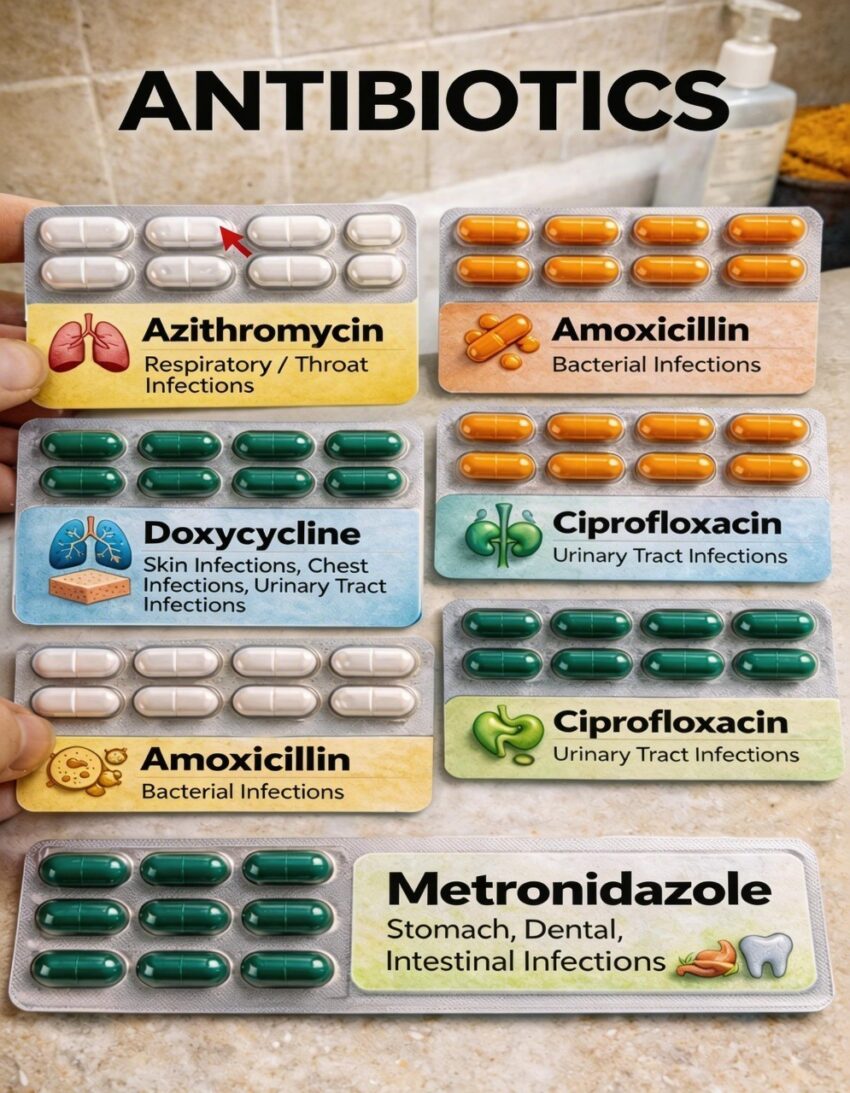
Here’s a clear guide to the top 5 common antibiotics, their uses, and why they are important in fighting infections:
💊 Top 5 Common Antibiotics
1. Amoxicillin
- Type: Penicillin antibiotic
- Uses: Treats ear infections, strep throat, sinus infections, and mild respiratory infections
- How it works: Stops bacteria from building cell walls, which kills them
- Notes: Often first-choice for children and adults; allergy to penicillin is common
2. Azithromycin (Z-Pak)
- Type: Macrolide antibiotic
- Uses: Treats respiratory infections, skin infections, and some sexually transmitted infections
- How it works: Stops bacteria from making essential proteins, preventing growth
- Notes: Usually taken as a short 5-day course
3. Ciprofloxacin
- Type: Fluoroquinolone antibiotic
- Uses: Treats urinary tract infections (UTIs), certain gastrointestinal infections, and some respiratory infections
- How it works: Interferes with bacterial DNA replication, killing the bacteria
- Notes: Should be used carefully; can have side effects like tendon pain or nerve issues
4. Cephalexin (Keflex)
- Type: Cephalosporin antibiotic
- Uses: Treats skin infections, bone infections, ear infections, and urinary tract infections
- How it works: Destroys bacterial cell walls
- Notes: Often used as an alternative for people allergic to penicillin (with caution)
5. Doxycycline
- Type: Tetracycline antibiotic
- Uses: Treats acne, respiratory infections, Lyme disease, and some sexually transmitted infections
- How it works: Stops bacteria from producing proteins they need to survive
- Notes: Can make skin sensitive to sunlight; not for children under 8
⚠️ Important Tips About Antibiotics
- Always complete the full course, even if you feel better.
- Do not self-prescribe; antibiotics are not effective against viruses (like colds or flu).
- Report allergies or side effects to your doctor immediately.
- Overuse can cause antibiotic resistance, making infections harder to treat.
💡 Key Takeaway
Antibiotics are powerful tools against bacterial infections, but each type has specific uses, benefits, and precautions. Knowing the top 5—Amoxicillin, Azithromycin, Ciprofloxacin, Cephalexin, and Doxycycline—can help you understand your treatment better.
I can also make a quick reference chart showing each antibiotic, what it treats, and precautions so it’s easy to remember.
Do you want me to create that chart?
