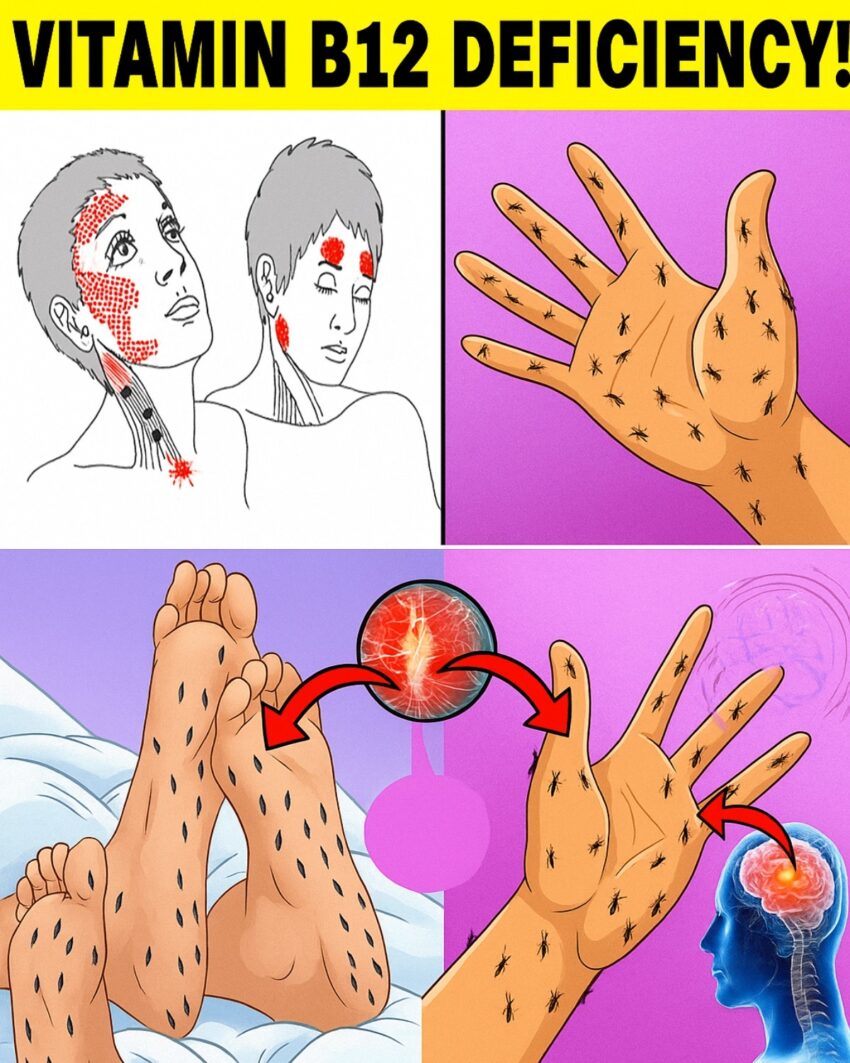
Vitamin B12 (cobalamin) is essential for red blood cell formation, neurological function, and DNA synthesis. A deficiency can lead to serious health problems if ignored. Here’s a detailed look at symptoms you should never ignore:
1. Fatigue and Weakness
- Feeling unusually tired or weak, even with adequate rest.
- Caused by impaired red blood cell production, reducing oxygen delivery to tissues.
2. Neurological Symptoms
- Numbness or tingling in hands and feet (peripheral neuropathy).
- Difficulty walking or balance problems due to nerve damage.
- Memory problems or cognitive decline (“brain fog”).
- Mood changes: depression, irritability, or anxiety.
3. Pale or Jaundiced Skin
- Pale skin results from reduced red blood cell production.
- Slight yellowing of the skin or eyes can occur due to the breakdown of defective red blood cells.
4. Glossitis and Mouth Ulcers
- Inflamed, red, or swollen tongue (glossitis).
- Mouth ulcers or a burning sensation, which can affect taste.
5. Shortness of Breath and Dizziness
- Occurs due to anemia and low oxygen levels in tissues.
6. Heart Palpitations
- Rapid or irregular heartbeat due to the heart compensating for reduced oxygen.
7. Digestive Issues
- Nausea, vomiting, diarrhea, or loss of appetite may occur in some cases.
8. Vision Changes
- Damage to the optic nerve (optic neuropathy) can cause blurred or disturbed vision.
9. Unexplained Neurological Decline
- Difficulty concentrating, confusion, or mood disturbances can sometimes precede obvious anemia.
⚠️ When to See a Doctor
- Any combination of fatigue, tingling, or memory problems.
- Persistent pale or jaundiced skin, shortness of breath, or heart palpitations.
- Early diagnosis is crucial—prolonged deficiency can cause permanent nerve damage.
Key Takeaway: B12 deficiency can mimic other conditions, so lab testing (serum B12, methylmalonic acid, homocysteine) is often necessary. Don’t ignore subtle neurological or cognitive changes—they may be the first signs.
If you want, I can make a simple checklist of early B12 deficiency symptoms that you can use for self-monitoring—it’s surprisingly easy to miss the early signs. Do you want me to do that?
