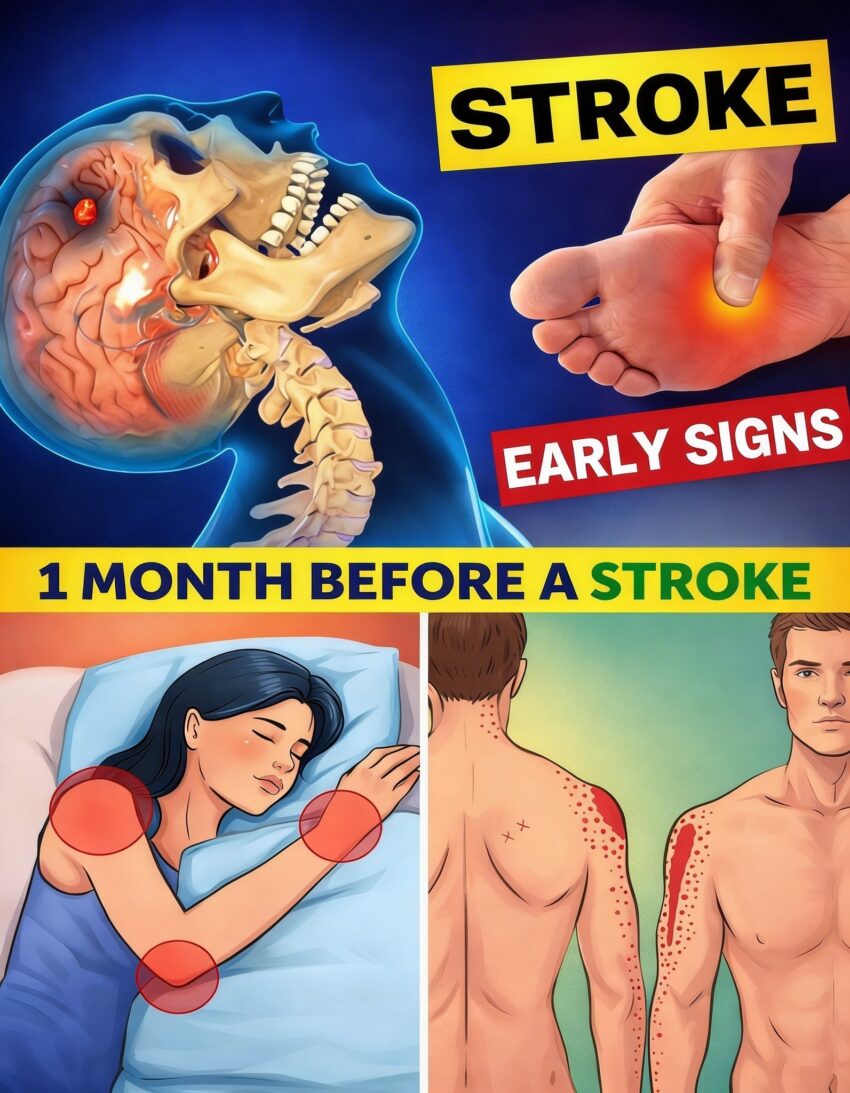
A quick but important clarification: stroke does not reliably give a fixed “one month warning period.” What people sometimes notice are risk signals or “mini-strokes” (Transient Ischemic Attacks, TIAs) that can happen days, weeks, or months before a major stroke—or sometimes not at all.
So rather than a guaranteed 30-day warning window, it’s more accurate to think of these as early warning signs that your brain’s blood supply may already be unstable.
🧠 8 Possible Early Warning Signs Before a Stroke
These symptoms may come and go (especially in TIAs), and should never be ignored:
- Sudden numbness or weakness
Especially on one side of the face, arm, or leg. - Speech or language problems
Slurred speech, trouble forming sentences, or understanding others. - Sudden vision changes
Blurred vision or loss of vision in one or both eyes. - Severe, unusual headache
A sudden “worst headache of life,” especially without a clear cause. - Dizziness or loss of balance
Trouble walking, coordination issues, or feeling unsteady. - Confusion or difficulty thinking clearly
Sudden trouble focusing or understanding simple things. - Facial drooping
One side of the face may appear uneven when smiling. - Brief stroke-like episodes (TIAs)
Short-lived symptoms that fully resolve within minutes or hours—this is a major warning for future stroke risk in many cases of Transient Ischemic Attack.
All of these can be related to Stroke risk, especially when they appear suddenly.
🛡️ 9 Tips to Help Prevent Stroke
Prevention focuses on protecting blood vessels, especially in the brain:
- Control blood pressure
This is the single most important prevention step. - Manage blood sugar (diabetes control)
High glucose damages blood vessels over time. - Keep cholesterol in check
Reduces plaque buildup in arteries. - Stop smoking
Smoking significantly increases clot and artery damage risk. - Stay physically active
Even 30 minutes of walking most days helps circulation. - Eat a heart-healthy diet
More fruits, vegetables, whole grains; less fried and processed food. - Reduce salt intake
Helps prevent hypertension. - Maintain a healthy weight
Reduces strain on the heart and blood vessels. - Manage stress and sleep properly
Chronic stress and poor sleep increase cardiovascular risk.
⚠️ When to take it seriously
If any sudden symptoms like speech difficulty, facial drooping, or one-sided weakness occur—even if they go away quickly—treat it as an emergency. Early treatment can prevent permanent brain damage.
If you want, I can also break down how to recognize a stroke in under 10 seconds (FAST test) or explain which symptoms are most often missed in young people.
