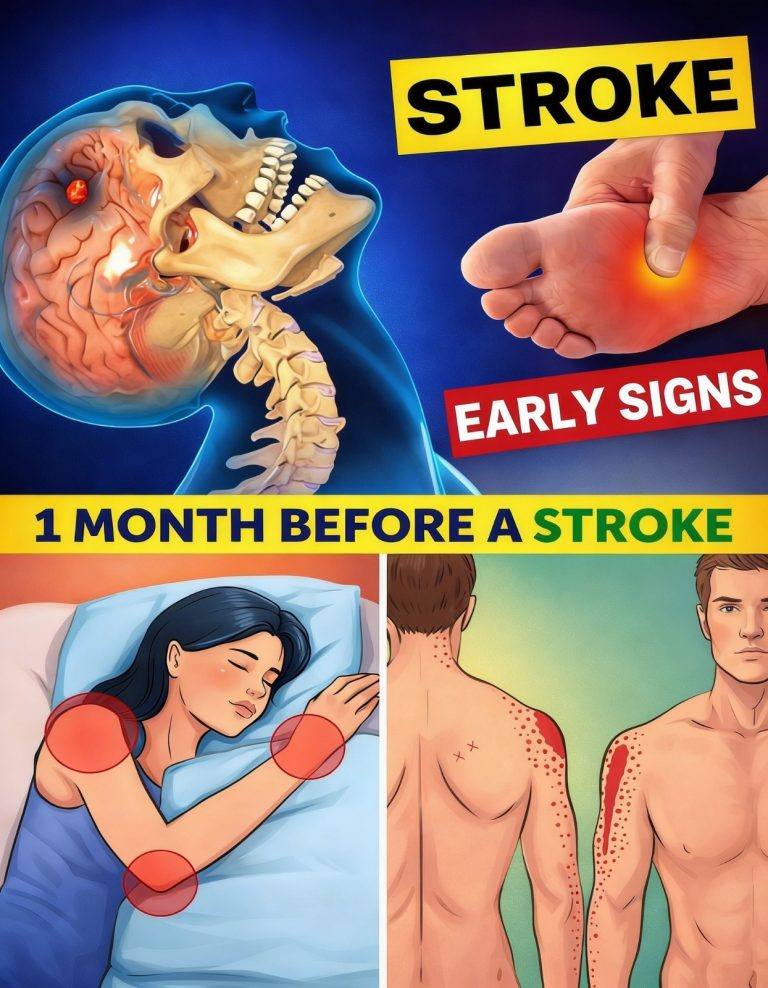
Here’s a clear, medically grounded overview of possible early warning signs of a stroke and ways to reduce your risk. Keep in mind: many strokes happen suddenly without a long warning period, but some people do experience subtle symptoms beforehand.
⚠️ 8 Possible Warning Signs Before a Stroke
These may appear days or even weeks earlier, especially in cases of a Transient Ischemic Attack (TIA), often called a “mini-stroke”:
1. Sudden numbness or weakness
Especially on one side of the body (face, arm, or leg).
2. Temporary vision problems
Blurred, double vision, or loss of vision in one or both eyes.
3. Difficulty speaking or understanding
Slurred speech or trouble finding words.
4. Severe, unexplained headaches
Particularly if different from usual headaches.
5. Dizziness or loss of balance
Trouble walking or feeling unsteady.
6. Sudden confusion
Difficulty concentrating or thinking clearly.
7. Facial drooping
One side of the face may sag or feel numb.
8. Short episodes of symptoms that go away
These brief episodes (minutes to hours) are especially concerning—they often indicate a TIA and a high risk of a future stroke.
🚑 Important: Recognize Stroke FAST
If symptoms are happening right now, remember FAST:
- Face drooping
- Arm weakness
- Speech difficulty
- Time to seek emergency help immediately
Stroke is a medical emergency.
🛡️ 9 Tips to Help Prevent Stroke
1. Control blood pressure
High blood pressure is the #1 risk factor.
2. Manage diabetes
Keep blood sugar under control to protect blood vessels.
3. Quit smoking
Smoking damages arteries and increases clot risk.
4. Exercise regularly
Aim for at least 30 minutes most days.
5. Eat a heart-healthy diet
Focus on fruits, vegetables, whole grains, and reduce salt and processed foods.
6. Maintain a healthy weight
Obesity increases stroke risk.
7. Limit alcohol
Too much alcohol raises blood pressure.
8. Control cholesterol
High cholesterol can lead to blocked arteries.
9. Manage heart conditions
Conditions like **Atrial Fibrillation significantly increase stroke risk.
🧠 Final Thought
Some of these warning signs can be subtle or temporary—but ignoring them can be dangerous. A **Stroke often follows earlier warning signals like a TIA.
If you or someone else experiences any of these symptoms—even if they go away—seek medical attention as soon as possible.
If you want, I can also tailor prevention tips specifically for your lifestyle or risk factors.
