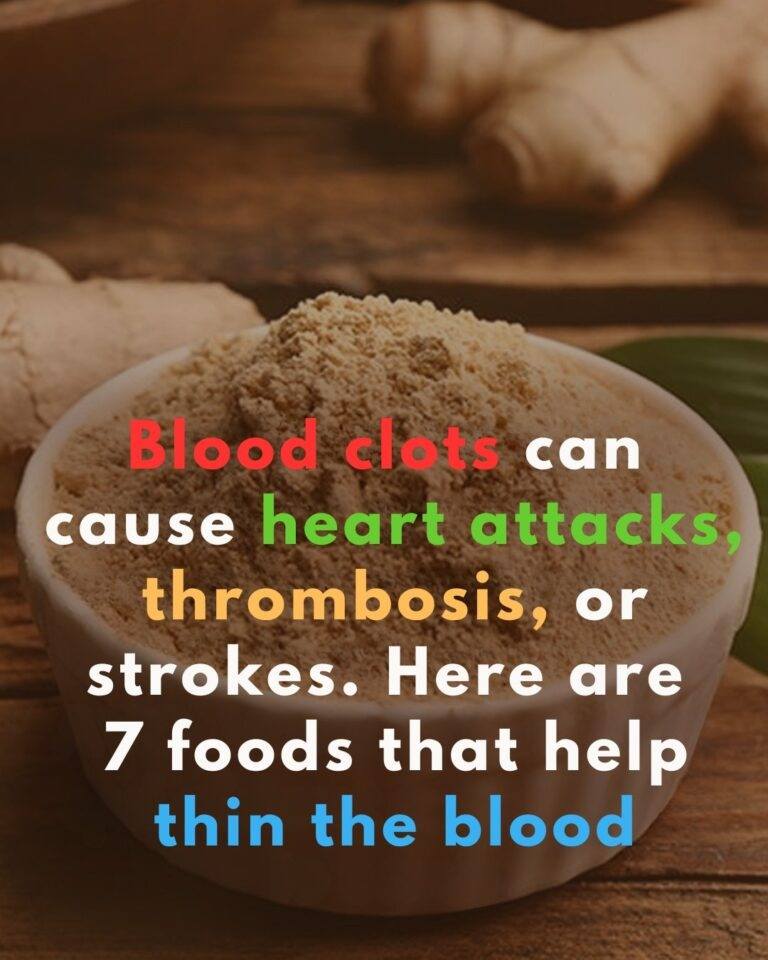
Here’s a careful, evidence-based look at foods that can naturally support healthy blood flow. These are often called “blood-thinning” foods because they may reduce platelet aggregation slightly — but they don’t replace prescribed blood-thinning medications. Always consult a doctor if you’re on anticoagulants.
1️⃣ Garlic
- Contains allicin, which may help reduce blood clotting.
- Works best raw or lightly cooked.
- Can slightly lower blood pressure too.
2️⃣ Ginger
- Contains gingerol and shogaol, which may support circulation.
- Can be added to teas, smoothies, or stir-fries.
3️⃣ Turmeric
- Active compound: curcumin.
- Has anti-inflammatory and mild anticoagulant properties.
- Best absorbed with black pepper and healthy fat.
4️⃣ Cayenne Pepper
- Contains capsaicin, which may improve circulation.
- Adds spice to meals but should be used in moderation.
5️⃣ Fatty Fish (Salmon, Mackerel, Sardines)
- Rich in omega-3 fatty acids, which reduce platelet aggregation.
- Supports heart and brain health too.
6️⃣ Berries (Blueberries, Strawberries, Cranberries)
- High in flavonoids and antioxidants.
- May help prevent platelet clumping and support vascular health.
7️⃣ Dark Chocolate (70%+ Cocoa)
- Contains flavonoids that improve circulation.
- Consume in moderation to avoid excess sugar and calories.
⚠️ Important Safety Notes
- These foods are mild; they do not replace medications like warfarin, apixaban, or heparin.
- Avoid large amounts if you’re already on blood thinners — it can increase bleeding risk.
- Always check with a doctor if you have heart conditions, bleeding disorders, or upcoming surgery.
If you want, I can make a “daily blood-thinning foods plan” that combines these safely for heart and circulation support. It would be practical and research-backed.
