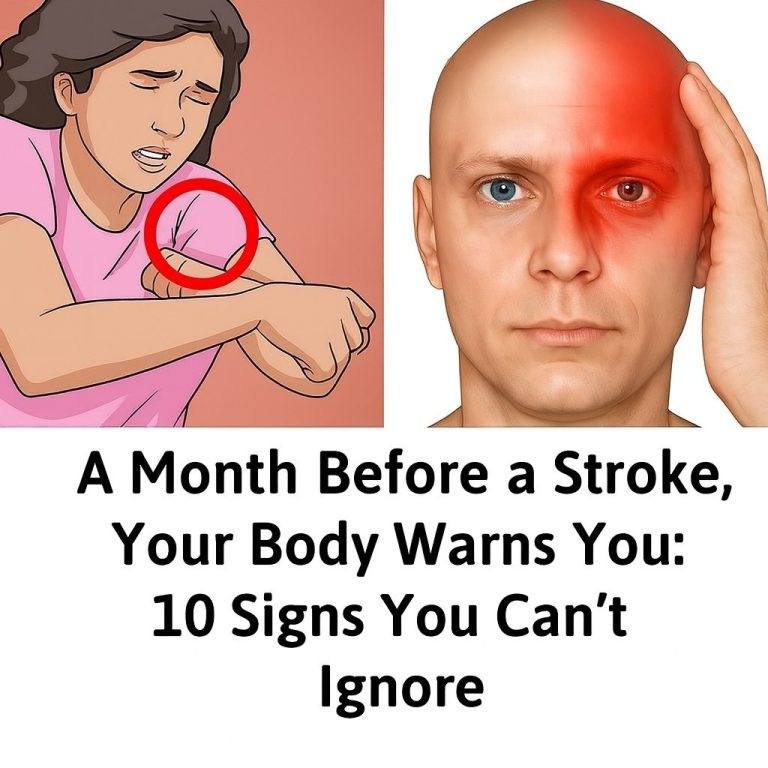
A stroke rarely comes “out of nowhere.” In many cases, the body gives warning signs days or even weeks beforehand — especially in the form of a mini-stroke, also called a TIA (transient ischemic attack).
A TIA is a temporary blockage of blood flow to the brain. Symptoms may last minutes to hours and then disappear — but it’s a medical emergency and a major warning sign.
Here are 10 warning signs you should never ignore:
1️⃣ Sudden Numbness or Weakness on One Side
Especially in the:
- Face
- Arm
- Leg
If one side feels weak, heavy, or numb — even briefly — seek medical care immediately.
2️⃣ Face Drooping
One side of the face may droop or feel numb.
Try smiling — if the smile looks uneven, it could signal a stroke.
3️⃣ Slurred or Confused Speech
You may:
- Struggle to find words
- Speak unclearly
- Have trouble understanding others
Speech problems are one of the most common early warnings.
4️⃣ Sudden Vision Problems
You may experience:
- Blurred vision
- Double vision
- Temporary loss of vision in one eye
This can happen if blood flow to the visual areas of the brain is reduced.
5️⃣ Severe, Unusual Headache
A sudden, intense headache — especially described as the “worst headache of your life” — can signal a hemorrhagic stroke.
6️⃣ Dizziness or Loss of Balance
Sudden trouble with:
- Walking
- Coordination
- Balance
Especially if combined with other symptoms.
7️⃣ Sudden Confusion
You may feel:
- Disoriented
- Mentally foggy
- Unable to follow simple instructions
8️⃣ Brief Fainting or Blackouts
Temporary loss of consciousness can sometimes precede a major event.
9️⃣ Sudden Fatigue (Unusual and Intense)
Some people — especially women — report extreme, unexplained fatigue days or weeks before a stroke.
🔟 Mini-Stroke (TIA)
A TIA may last only a few minutes and then disappear.
Because symptoms resolve, many people ignore it — which is dangerous.
Up to 1 in 3 people who have a TIA go on to have a full stroke, often within weeks.
Remember FAST
- F – Face drooping
- A – Arm weakness
- S – Speech difficulty
- T – Time to call emergency services
Important: Don’t Wait
If you or someone experiences these symptoms — even if they go away — seek emergency care immediately. Early treatment can prevent permanent brain damage.
Who Is at Higher Risk?
- High blood pressure
- Diabetes
- Smoking
- High cholesterol
- Obesity
- Irregular heartbeat (like atrial fibrillation)
- Family history of stroke
Bottom Line
A stroke often comes with warning signs. Acting fast can save brain function — and lives.
If you’d like, I can also share how to lower your stroke risk naturally or explain the difference between ischemic and hemorrhagic stroke.
