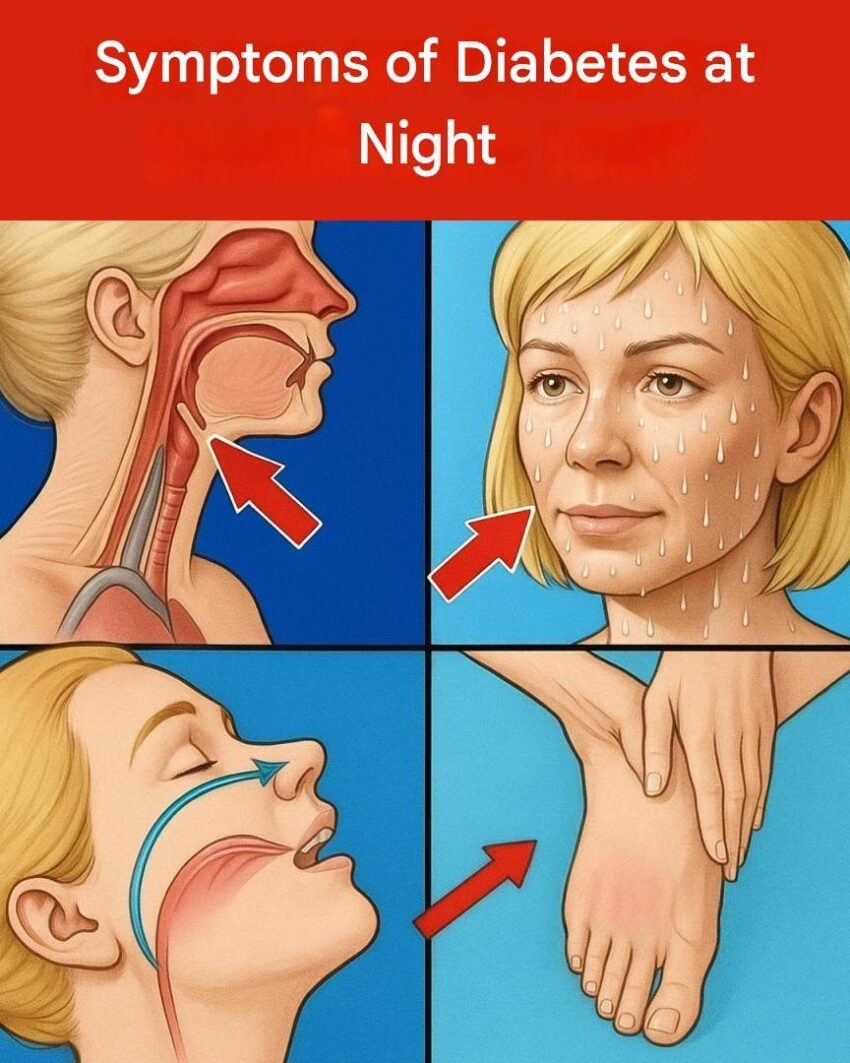
5 Diabetes Symptoms That Appear at Night
Diabetes is a chronic condition that affects how the body processes blood sugar (glucose). In many cases, the early signs of diabetes can appear subtly, especially at night when the body is at rest. These symptoms are often overlooked or mistaken for normal sleep disturbances. However, recognizing them early can help in seeking medical advice and managing blood sugar levels before complications develop.
Below are five common diabetes symptoms that often appear during the night.
1. Frequent Urination During the Night (Nocturia)
One of the most common signs of diabetes is waking up multiple times during the night to urinate.
When blood sugar levels are high, the kidneys try to remove the excess glucose from the body through urine. This process pulls more water from the tissues, leading to increased urine production.
Signs to watch for include:
- Waking up two or more times at night to urinate
- Producing large amounts of urine
- Feeling the need to urinate even if you drank little fluid before bed
Frequent nighttime urination can disrupt sleep and may indicate that blood sugar levels are not well controlled.
2. Excessive Nighttime Thirst
People with diabetes often experience intense thirst at night, even if they have been drinking fluids regularly throughout the day.
This happens because the body loses a lot of fluid through frequent urination. As a result, the body becomes dehydrated and signals the brain to increase thirst.
Common signs include:
- Waking up with a very dry mouth
- Feeling the need to drink water repeatedly during the night
- Keeping water near the bed due to persistent thirst
Persistent nighttime thirst can be an important clue that blood sugar levels may be elevated.
3. Night Sweats
Sudden or excessive sweating during sleep can also be associated with diabetes.
Night sweats may occur when blood sugar levels drop too low during the night, a condition known as nocturnal hypoglycemia. This can happen in people who use insulin or certain diabetes medications.
Symptoms may include:
- Waking up with damp clothing or bedsheets
- Feeling shaky, weak, or anxious during the night
- Sudden sweating without a warm room temperature
These episodes can interrupt sleep and may require adjustments in diet, medication, or bedtime routines.
4. Restless Sleep or Difficulty Sleeping
Diabetes can cause sleep disturbances, making it difficult to get restful sleep.
High or low blood sugar levels can trigger symptoms such as discomfort, thirst, frequent urination, or sweating, which repeatedly wake a person during the night.
Signs include:
- Difficulty falling asleep
- Waking up frequently throughout the night
- Feeling tired even after a full night’s sleep
Over time, poor sleep can worsen blood sugar control and contribute to fatigue during the day.
5. Tingling, Burning, or Numbness in the Feet
Another nighttime symptom of diabetes is nerve discomfort in the feet or legs. High blood sugar over time can damage nerves, leading to a condition known as diabetic neuropathy.
This often becomes more noticeable at night when the body is resting and there are fewer distractions.
Symptoms may include:
- Tingling or “pins and needles” sensations
- Burning pain in the feet
- Numbness or unusual sensitivity in the legs
These sensations can make it difficult to fall asleep or stay asleep.
When to See a Doctor
If you frequently experience these nighttime symptoms—especially excessive thirst, frequent urination, or unusual sweating during sleep—it may be important to consult a healthcare professional.
Early detection of diabetes allows for better management through lifestyle changes, medication, and monitoring of blood sugar levels.
Final Thoughts
Nighttime symptoms are sometimes the first warning signs of diabetes. Paying attention to changes in sleep patterns, thirst levels, and nighttime discomfort can help identify potential health issues early.
Maintaining a healthy lifestyle, including balanced nutrition, regular physical activity, and routine medical checkups, plays an essential role in preventing and managing diabetes.
