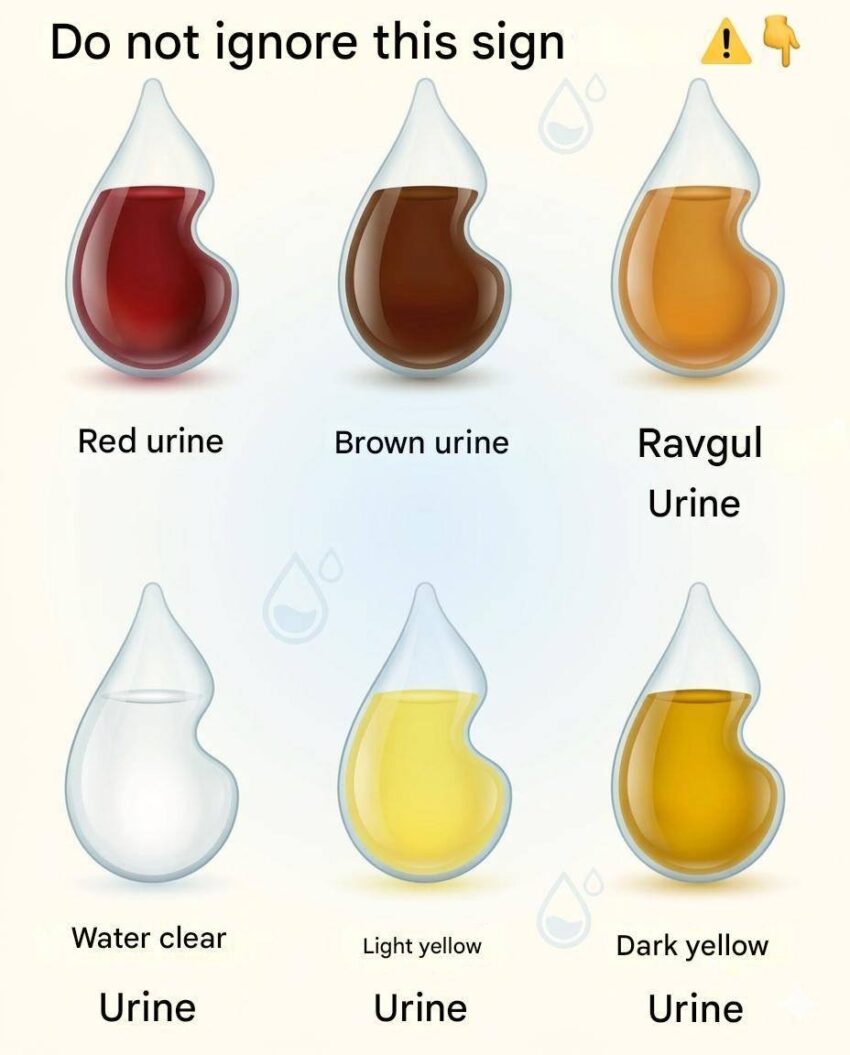
Urine color can give useful clues about your hydration and sometimes your overall health, but it’s not a standalone diagnostic tool. Here’s what different colors commonly suggest:
1. Pale yellow to light straw (ideal)
This is usually a sign of good hydration and normal kidney function. It means your body has enough water, and waste products are being diluted properly.
2. Clear
Often means you’re very well-hydrated—sometimes even overhydrated. Not usually dangerous, but consistently very clear urine can mean you’re drinking more water than your body needs.
3. Dark yellow or amber
This is the most common sign of dehydration. Your kidneys are conserving water, making urine more concentrated.
4. Honey or dark brown
Can indicate more significant dehydration, but it can also be a warning sign of liver issues (especially if persistent) or certain medications. If it doesn’t improve with hydration, it’s worth getting checked.
5. Pink or red
This can be caused by harmless things like beetroot, berries, or food coloring. However, it can also signal blood in the urine, which may be linked to infections, kidney stones, or other conditions that need medical attention.
6. Orange
May result from dehydration, certain medications, or bile duct/liver-related issues.
7. Blue or green (rare)
Usually caused by dyes in food, medications, or very uncommon genetic or bacterial conditions.
8. Cloudy or murky
Can suggest urinary tract infections (UTIs), kidney stones, or sometimes dehydration.
When to pay attention
You should consider seeing a healthcare professional if:
- Unusual color lasts more than a day or two
- There is pain, burning, fever, or strong odor
- You notice blood or consistently dark urine despite drinking fluids
Urine color is basically your body’s quick “status report” on hydration and sometimes internal health—but it works best when combined with other symptoms, not on its own.
