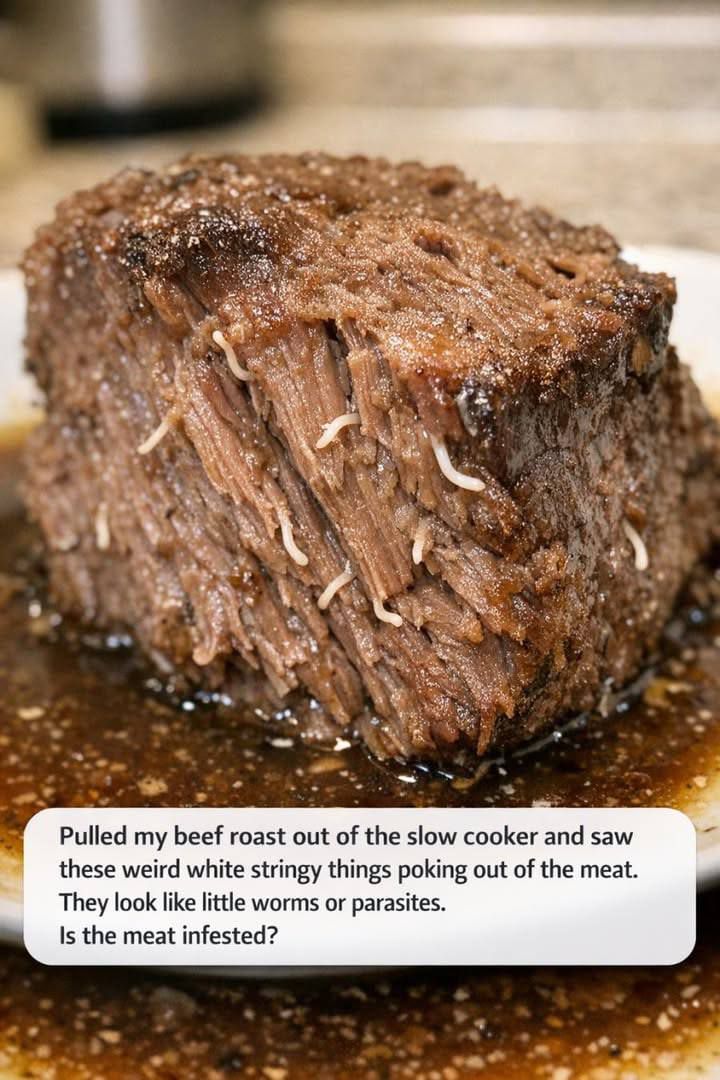
What you’re describing is actually most likely connective tissue or fat, not parasites. When slow-cooked beef is exposed to heat for a long time, the muscle fibers, collagen, and fat can sometimes appear as white, stringy “threads” that poke out of the meat. Here’s a breakdown:
Why You See White Stringy Things in Slow-Cooked Beef
- Collagen / Connective Tissue
- Beef muscles contain collagen, which melts into gelatin when cooked slowly.
- Some strands can remain partially intact, appearing like white threads.
- Fat Strands
- Intramuscular fat (marbling) can appear as stringy, white lines when heated.
- Slow cooking softens it, but it doesn’t always fully dissolve.
- Not Parasites
- Beef parasites are extremely rare in store-bought or properly handled meat.
- Common parasites in beef (like Taenia saginata, beef tapeworm) are almost always destroyed by slow cooking.
- Appearance alone does not indicate contamination.
Tips to Check for Safety
- Smell: Cooked beef should smell savory, not sour, metallic, or off.
- Color: Properly cooked beef should be brown throughout; slow cookers can leave some pink near the center, which is usually safe if it reaches at least 145°F (63°C) internal temperature for roasts.
- Texture: Stringy or fibrous strands that pull apart with the meat are normal.
✅ Bottom line: What you’re seeing is almost certainly harmless connective tissue or fat, not worms or parasites. Your roast should be perfectly safe to eat if it was cooked to the right temperature and handled properly.
If you want, I can show a picture comparison of normal slow-cooked beef fibers vs. what actual parasites would look like, so you can visually confirm it’s safe.
Do you want me to do that?
