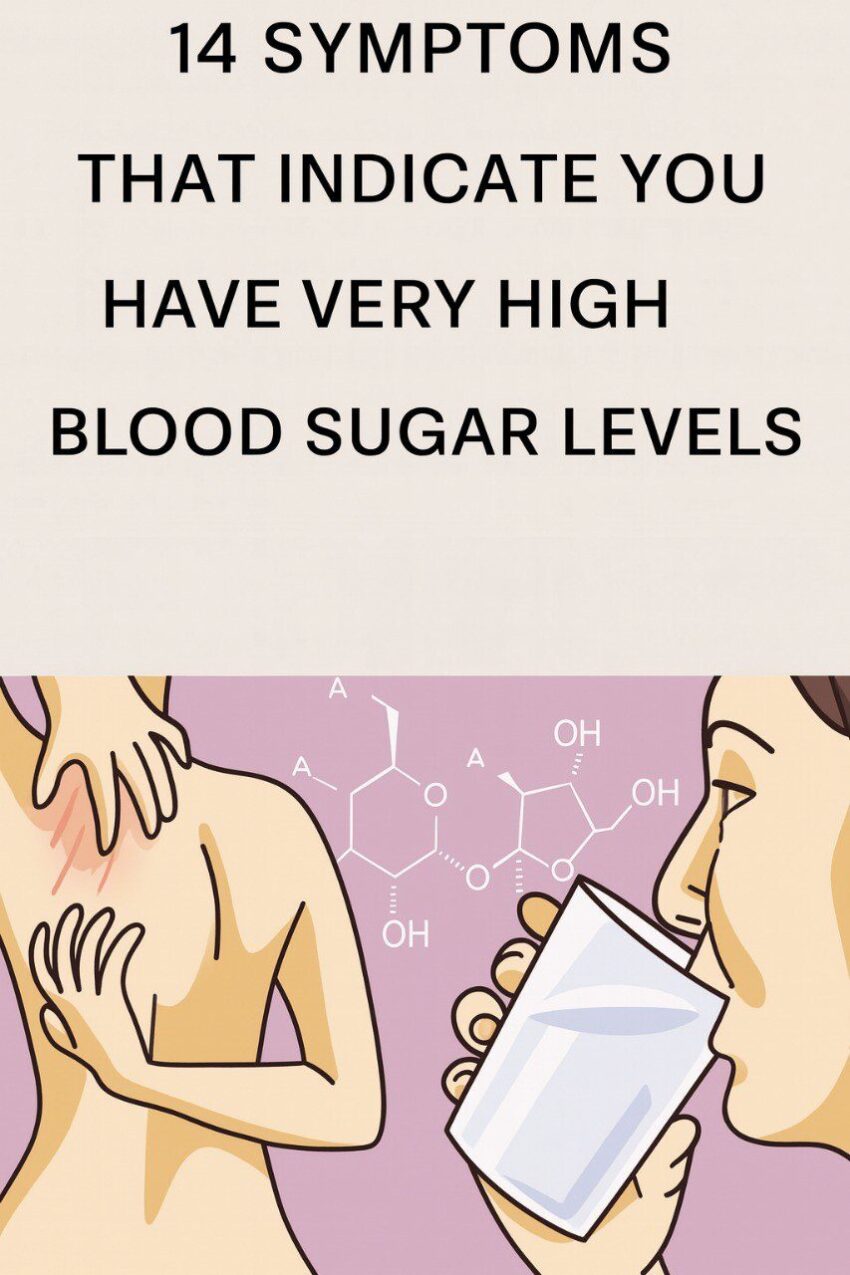
Here’s a detailed guide to 14 symptoms that may indicate very high blood sugar (hyperglycemia). High blood sugar can be dangerous if left unchecked, especially in people with diabetes, so spotting the signs early is important. 🩸⚠️
1. Frequent Urination (Polyuria)
- High glucose causes the kidneys to filter excess sugar, pulling water with it.
- Leads to more trips to the bathroom, especially at night.
2. Excessive Thirst (Polydipsia)
- Dehydration from frequent urination triggers intense thirst.
3. Extreme Hunger (Polyphagia)
- Cells can’t absorb glucose properly, signaling the body to eat more.
4. Fatigue
- Glucose cannot enter cells efficiently, causing low energy and constant tiredness.
5. Blurred Vision
- High sugar changes fluid levels in the eyes, affecting the shape of the lens and vision.
6. Headaches
- Frequent, unexplained headaches can be a sign of high blood sugar.
7. Dry Mouth and Skin
- Dehydration leads to dry, itchy skin and a sticky mouth feeling.
8. Slow-Healing Wounds
- Elevated glucose impairs circulation and immune response, delaying healing.
9. Recurrent Infections
- High sugar encourages bacterial and fungal growth, leading to bladder, skin, or yeast infections.
10. Nausea and Vomiting
- Severe hyperglycemia can trigger stomach upset and vomiting.
11. Unexplained Weight Loss
- The body burns fat and muscle for energy when it cannot use glucose effectively.
12. Fruity-Smelling Breath
- A sign of diabetic ketoacidosis (DKA), usually in type 1 diabetes.
13. Tingling or Numbness
- Persistent high sugar can damage nerves, causing pins-and-needles or numbness, especially in hands and feet.
14. Mental Confusion or Irritability
- Severe hyperglycemia may affect the brain, causing difficulty concentrating, confusion, or irritability.
⚠️ When to Seek Medical Help
- Blood sugar consistently above 250 mg/dL (13.9 mmol/L)
- Signs of DKA: nausea, vomiting, fruity breath, rapid breathing
- Severe fatigue, blurred vision, or confusion
✅ Tips for Managing High Blood Sugar
- Monitor blood glucose regularly.
- Stay hydrated.
- Eat balanced meals with low glycemic index foods.
- Exercise regularly (unless your doctor advises otherwise).
- Follow prescribed medications or insulin.
- See a healthcare professional if symptoms persist or worsen.
If you want, I can make a “Hyperglycemia Symptoms Chart” showing all 14 signs, how severe they are, and when to act immediately. This makes it much easier to recognize high blood sugar quickly.
Do you want me to make that chart?
