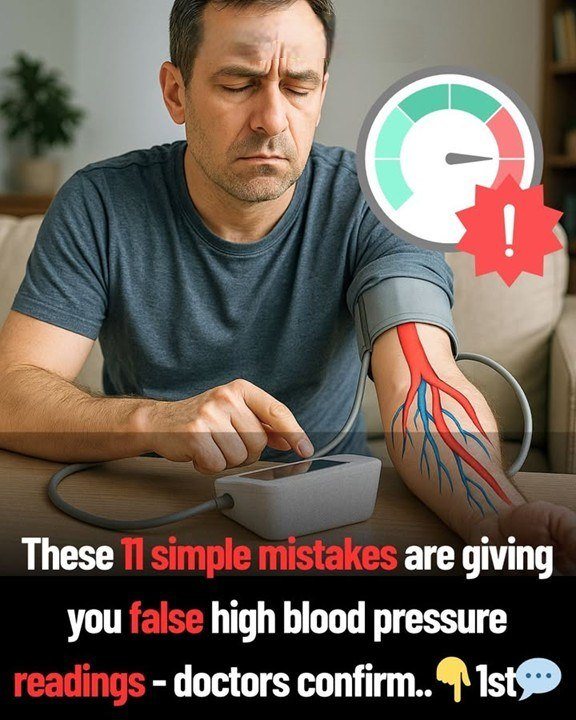
Getting false high blood pressure readings can happen surprisingly often, even at home or in a clinic. Doctors confirm that small mistakes in technique or environment can make your numbers appear higher than they really are. Here’s a detailed look at 11 common mistakes:
11 Common Mistakes That Skew Blood Pressure Readings
1. Wrong Cuff Size
- Using a cuff that is too small or too large can give inaccurate readings.
- Always use the correct cuff size for your arm circumference.
2. Incorrect Cuff Placement
- The cuff should be around the upper arm at heart level, not too high or low.
3. Sitting Posture
- Sit upright, back supported, feet flat on the floor.
- Crossing legs or slouching can raise readings.
4. Talking or Moving
- Talking, fidgeting, or moving your arm during measurement can cause spikes.
5. Measuring Too Soon After Activity
- Wait at least 5 minutes after exercise, caffeine, or smoking before measuring.
6. Stress or Anxiety
- “White coat effect”: anxiety during readings can temporarily raise BP.
7. Full Bladder
- A full bladder can increase systolic pressure by up to 10 mmHg.
8. Improper Rest Before Measurement
- Rest quietly for 5–10 minutes before taking a reading.
9. Multiple Readings Too Quickly
- Wait 1–2 minutes between measurements. Rapid repeated readings may differ.
10. Measuring Over Clothing
- Place the cuff directly on bare skin, not over sleeves.
11. Using a Faulty Device
- Home monitors need regular calibration to ensure accuracy.
- Consider checking your device against a clinic’s reading periodically.
Tips for Accurate Blood Pressure Monitoring
- Measure at the same time every day, preferably morning and evening.
- Keep a log of readings to track trends, not single spikes.
- Share readings with your doctor to interpret them correctly.
💡 Key Takeaway:
Even simple mistakes can make your blood pressure seem higher than it really is. Proper technique, correct equipment, and calm conditions are essential for reliable readings.
I can also make a visual checklist of the 11 mistakes and how to avoid them — perfect for home monitoring.
Do you want me to make that checklist?
