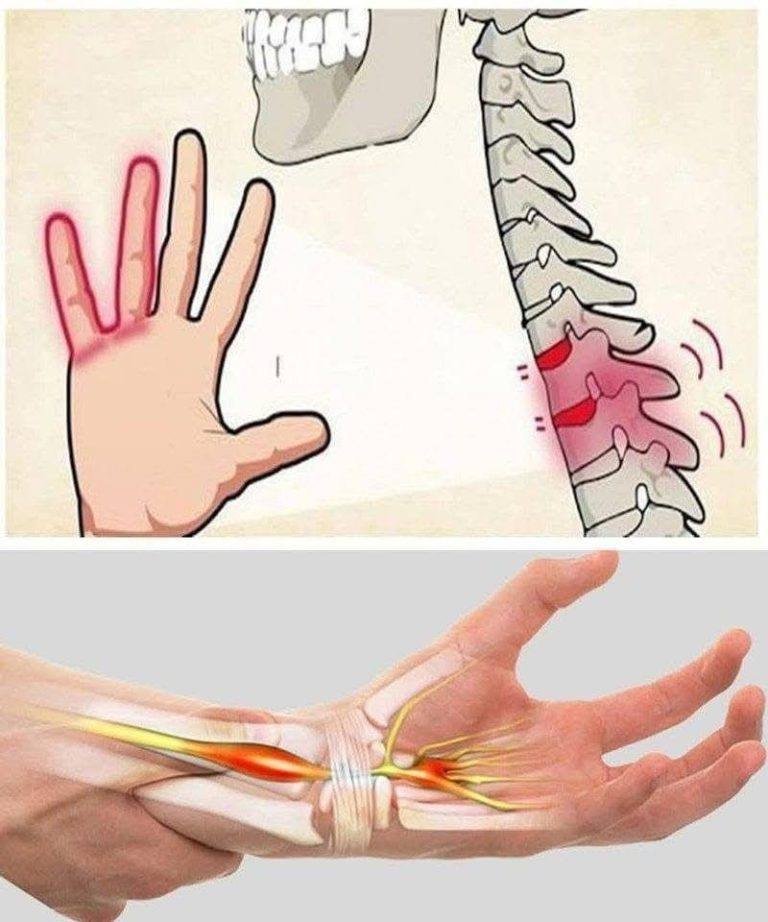
If your hands “fall asleep” (feel numb, tingly, or like pins-and-needles), it usually means a nerve or blood flow issue. Occasional episodes are common and often harmless, but frequent numbness can signal an underlying condition. Here are the most common possibilities:
1. Carpal Tunnel Syndrome
- One of the most common causes of hand numbness.
- Occurs when the median nerve is compressed in the wrist.
- Symptoms:
- Tingling in thumb, index, and middle fingers
- Weak grip
- Symptoms often worse at night.
2. Peripheral Neuropathy
- Nerve damage that can cause numbness, tingling, or burning sensations.
- Common causes include:
- Diabetes
- Vitamin deficiencies (especially B12)
- Alcohol misuse.
3. Cervical Radiculopathy
- A nerve in the neck becomes compressed.
- Can cause numbness that travels from the neck to the shoulder, arm, and hand.
4. Poor Sleeping Position
- Sleeping with your arm under your body or pillow can temporarily compress nerves or blood vessels.
- Usually resolves quickly once you move your arm.
5. Poor Circulation
- Reduced blood flow to the hands can cause temporary numbness or tingling.
- Often happens in cold environments or with tight clothing.
6. Vitamin Deficiency
- Low levels of vitamin B12 or B6 may lead to nerve problems and tingling in the hands.
✅ When to See a Doctor
Seek medical advice if numbness:
- Happens frequently or lasts a long time
- Causes weakness or loss of grip strength
- Spreads to the arm, shoulder, or face
- Occurs suddenly with speech or vision problems.
💡 Simple prevention tips
- Avoid sleeping on your hands.
- Stretch wrists and fingers during long computer use.
- Maintain good posture.
- Ensure a balanced diet with enough vitamins.
If you want, I can also show you 7 hidden diseases that frequent hand numbness may reveal—some are surprising and often ignored.
