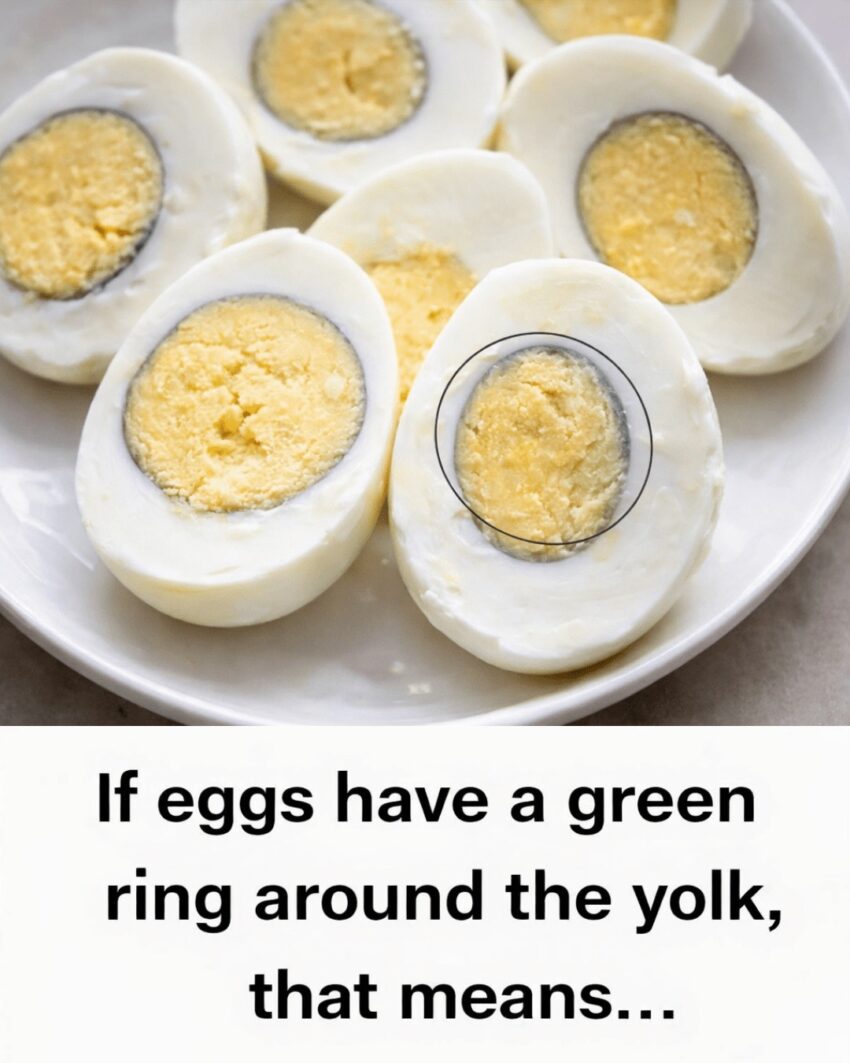
The green ring around a hard-boiled egg yolk is a common phenomenon, but it’s harmless. Here’s the science behind it and how to prevent it:
Why It Happens
- The green or gray ring forms when sulfur in the egg white reacts with iron in the yolk.
- This reaction happens most often when eggs are overcooked or cooked at high temperatures.
- It’s purely a chemical reaction—the egg is still safe to eat.
Chemical Reaction:
Sulfur (from egg white) + Iron (from yolk) → Iron sulfide (green/gray color)
Easy Prevention Tips
- Avoid Overcooking
- Boil eggs for 9–12 minutes depending on size.
- Cool Quickly
- Place eggs in ice water immediately after boiling to stop the cooking process.
- Gentle Boil
- Avoid rolling a rapid, hard boil. A simmering boil produces a tender, evenly cooked egg.
- Peel After Cooling
- Peeling eggs after cooling reduces the chance of the ring forming and keeps yolks bright.
Quick Tip
- The green ring does not affect taste or nutrition, so while it may look unappetizing, your egg is still safe and healthy to eat.
💡 Fun fact: The same reaction explains why some baked egg dishes or deviled eggs sometimes show a grayish-green hue if overcooked.
I can also make a step-by-step infographic for perfectly cooked hard-boiled eggs showing timing, cooling, and peeling tips to avoid the green ring entirely.
Do you want me to make that infographic?
