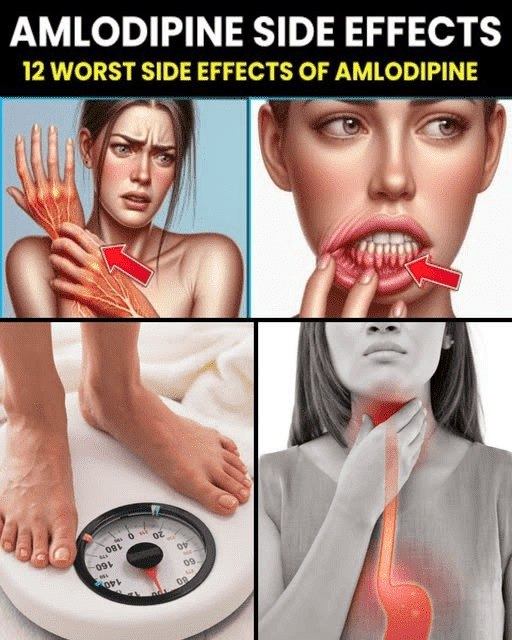
12 Worst Side Effects of Amlodipine You Should Never Ignore
Amlodipine is commonly prescribed to treat high blood pressure and chest pain (angina). It works by relaxing blood vessels so blood can flow more easily. While many people take it safely, some side effects can be serious and should not be ignored.
Below are important symptoms that may require medical attention if they occur.
1. Severe Swelling (Edema)
One of the most common side effects is swelling in the feet, ankles, or legs. Mild swelling can happen, but sudden or severe swelling may indicate your body is reacting strongly to the medication.
2. Chest Pain or Worsening Angina
In rare cases, chest pain may worsen when starting the medication or when the dose increases. This requires immediate medical attention.
3. Irregular or Rapid Heartbeat
Some people may notice heart palpitations, racing heart, or irregular rhythm. If this happens frequently or suddenly, contact a healthcare professional.
4. Severe Dizziness or Fainting
Amlodipine lowers blood pressure, which may lead to lightheadedness, dizziness, or fainting, especially when standing up quickly.
5. Shortness of Breath
Difficulty breathing or feeling unusually breathless can signal fluid buildup or heart-related complications.
6. Extreme Fatigue or Weakness
Persistent tiredness or weakness may mean your blood pressure has dropped too low or your body is not tolerating the medication well.
7. Nausea or Stomach Pain
Some people experience digestive discomfort, including nausea, stomach pain, or loss of appetite.
8. Skin Rash or Allergic Reaction
Rashes, itching, swelling of the face or throat, or difficulty breathing may indicate an allergic reaction, which needs immediate medical care.
9. Gum Swelling (Gingival Hyperplasia)
A less-known side effect is overgrowth or swelling of the gums, which may occur with long-term use.
10. Mood Changes or Confusion
Some patients report unusual mood changes, anxiety, or confusion, though these effects are less common.
11. Severe Headaches
Frequent or intense headaches may occur due to blood vessel changes caused by the medication.
12. Yellowing of Skin or Eyes
Yellow skin or eyes may indicate liver problems, a rare but serious reaction.
Important Safety Advice
- Never stop taking amlodipine suddenly without consulting your doctor.
- Report persistent or severe side effects to a healthcare provider immediately.
- Regular blood pressure monitoring can help ensure the medication is working safely.
💡 Bottom Line:
Amlodipine is effective for controlling high blood pressure, but knowing the warning signs of serious side effects can help you seek medical care early and avoid complications.
If you’d like, I can also explain 5 common medications that should not be taken together with amlodipine, which many patients don’t realize.
