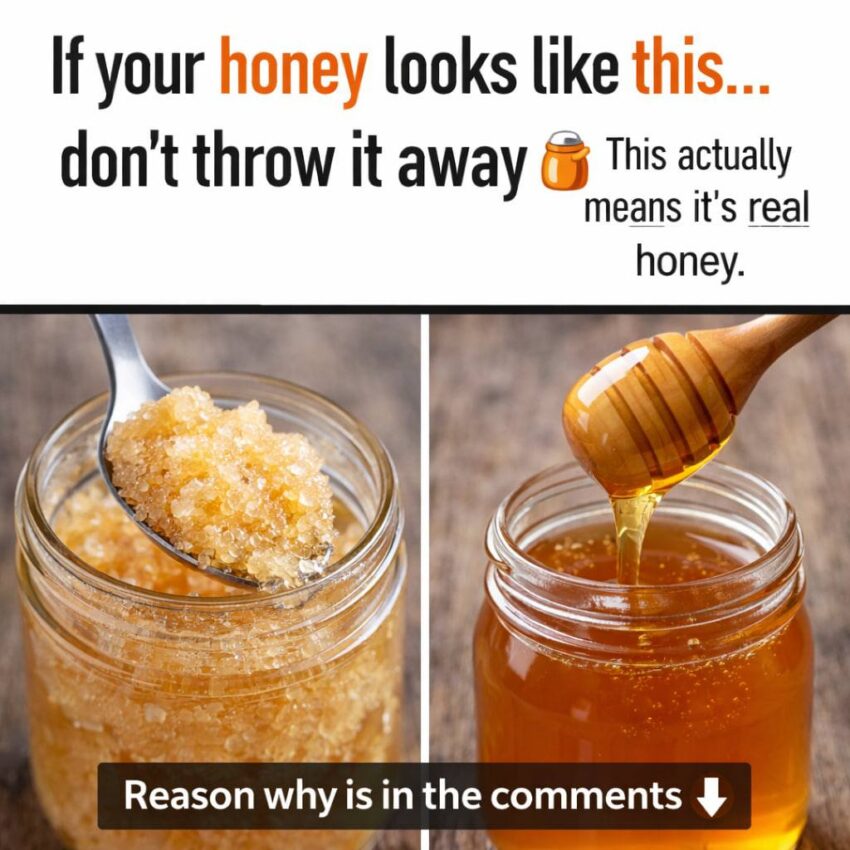
Honey crystallization is completely natural and actually a sign of quality, not spoilage. Here’s what’s happening:
Why Honey Crystallizes
- Natural Sugars Separate
- Honey is mostly glucose and fructose.
- Over time, glucose forms tiny crystals and separates from the water in honey, while fructose remains liquid.
- Type of Honey Matters
- Honeys high in glucose (like clover or sunflower) crystallize faster.
- Honeys high in fructose (like acacia) stay liquid longer.
- Temperature Effects
- Honey crystallizes faster at cooler temperatures (below 50°F / 10°C).
- Warm storage slows crystallization but doesn’t stop it completely.
Why Crystallization Is Good
- Indicator of Purity
- Raw, unprocessed honey naturally crystallizes, while heavily processed honey often stays liquid.
- Easier to Spread
- Crystallized honey has a thicker, creamy texture, perfect for spreading on toast or desserts.
- Nutrient Retention
- Crystallization doesn’t affect enzymes, antioxidants, or vitamins in honey.
How to Return Honey to Liquid
- Place the jar in a warm water bath and stir until smooth.
- Avoid microwaving directly, as high heat can destroy nutrients.
💡 Bottom line:
Crystallization is natural, harmless, and even a sign of quality honey. It shows that your honey is raw, unprocessed, and retains its natural benefits.
If you want, I can also share a trick to keep honey liquid for months without losing its nutrients.
