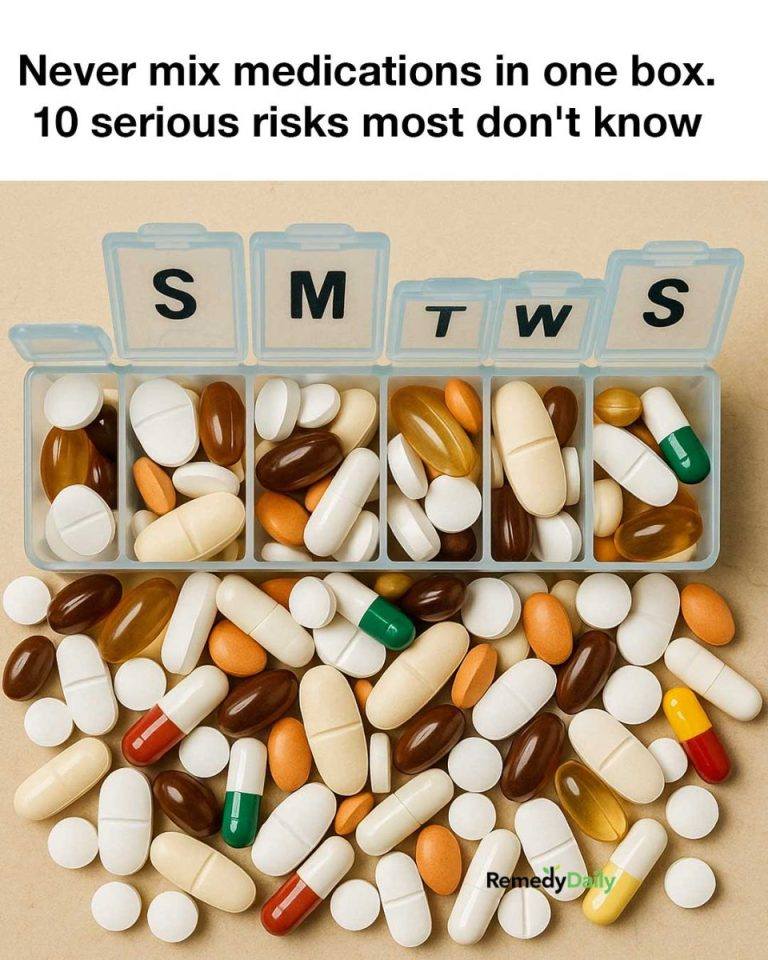
Mixing different medications together in one pill box or container may seem convenient, but it can create serious health and safety risks. Many pharmacists warn against it unless the box is properly labeled and organized. Here are 10 risks most people don’t realize:
1. Medication Mix-Ups ⚠️
When pills look similar, it’s easy to take the wrong medication or the wrong dose, especially for older adults.
2. Loss of Important Labels 🏷️
Original bottles contain dosage instructions, warnings, and expiration dates. When pills are mixed, this information is lost.
3. Drug Interactions 💊
Certain medications should not be taken together. Mixing them increases the chance of taking them at the wrong time.
4. Reduced Effectiveness
Some medicines are sensitive to air, light, or moisture. The original container protects them, but a mixed box may not.
5. Risk of Overdose
Without clear separation, a person might accidentally take the same medicine twice.
6. Difficulty for Doctors or Emergency Staff 🚑
If you become sick and doctors need to know what medications you’re taking, mixed pills make it hard to identify them quickly.
7. Cross-Contamination
Some tablets can break, crumble, or leave powder, which may mix with other medications.
8. Expiration Confusion ⏳
Different medicines expire at different times. When mixed together, it’s impossible to know which pills are still safe.
9. Travel or Security Problems ✈️
During travel or medical checks, authorities may require medications to be in their original labeled containers.
10. Accidental Use by Others
Someone in the household could mistake the mixed pills for their own medication.
✅ Safer Alternative:
Use a weekly pill organizer with separate compartments for each day and time while keeping the original bottles nearby for reference.
💡 Bottom line:
Mixing medications in one container may save space, but it can lead to dangerous mistakes, incorrect dosing, and confusion in emergencies. Keeping medicines properly labeled and organized is much safer.
