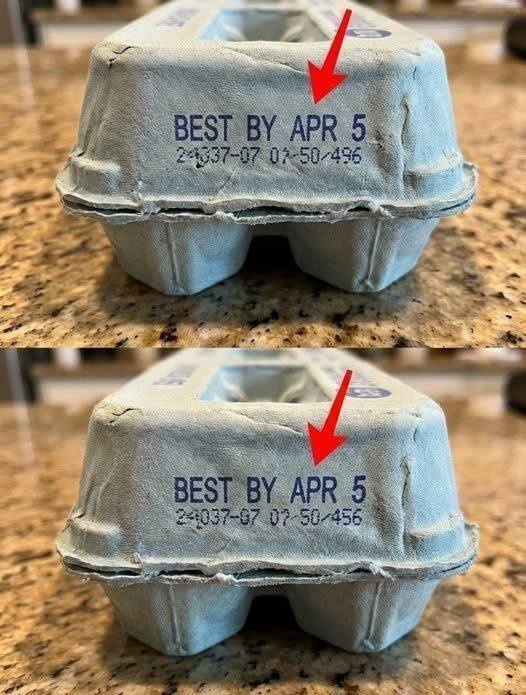
What the Numbers on Your Egg Carton Really Mean — And Why Ignoring Them Could Make You Sick
When you buy eggs at the store, the carton usually has several printed numbers and codes. Many people ignore them, but they actually provide important information about freshness, safety, and where the eggs were processed. Understanding these numbers can help you avoid eating spoiled eggs and reduce the risk of foodborne illness such as Salmonella.
1. The Julian Date (Three-Digit Number)
One of the most important numbers on an egg carton is the Julian date.
- It’s a three-digit number between 001 and 365.
- This number tells you the day of the year the eggs were packed.
Examples:
- 001 = January 1
- 100 = April 10
- 365 = December 31
This helps determine how fresh the eggs are.
2. The Plant Code
Another code often starts with the letter “P” followed by numbers.
Example: P-1234
This is the processing plant code, showing where the eggs were washed, graded, and packaged. If there’s ever a recall or safety issue, this code helps track the eggs back to the source.
3. Sell-By or Expiration Date
Most cartons also show a “sell-by” or expiration date.
However, eggs are often still safe for several weeks after this date if they are properly refrigerated.
To check freshness at home, you can try the water test:
- Fresh eggs sink and lie flat.
- Older eggs stand upright.
- Spoiled eggs float.
4. Why Ignoring These Numbers Can Be Risky
Eating eggs that are too old or poorly stored may increase the chance of bacterial growth, including Salmonella, which can cause:
- Nausea
- Diarrhea
- Fever
- Stomach cramps
This is especially important for children, pregnant women, and older adults.
Tips for Safe Egg Storage
- Keep eggs refrigerated at or below 4°C (40°F).
- Store them in the original carton to protect from odors and moisture.
- Avoid washing eggs before storage; wash them just before use if needed.
- Cook eggs thoroughly if you’re concerned about bacteria.
✅ Bottom Line:
Those small numbers on your egg carton aren’t random. They reveal when the eggs were packed, where they were processed, and how fresh they are—important details that can help keep your food safe and your family healthy.
