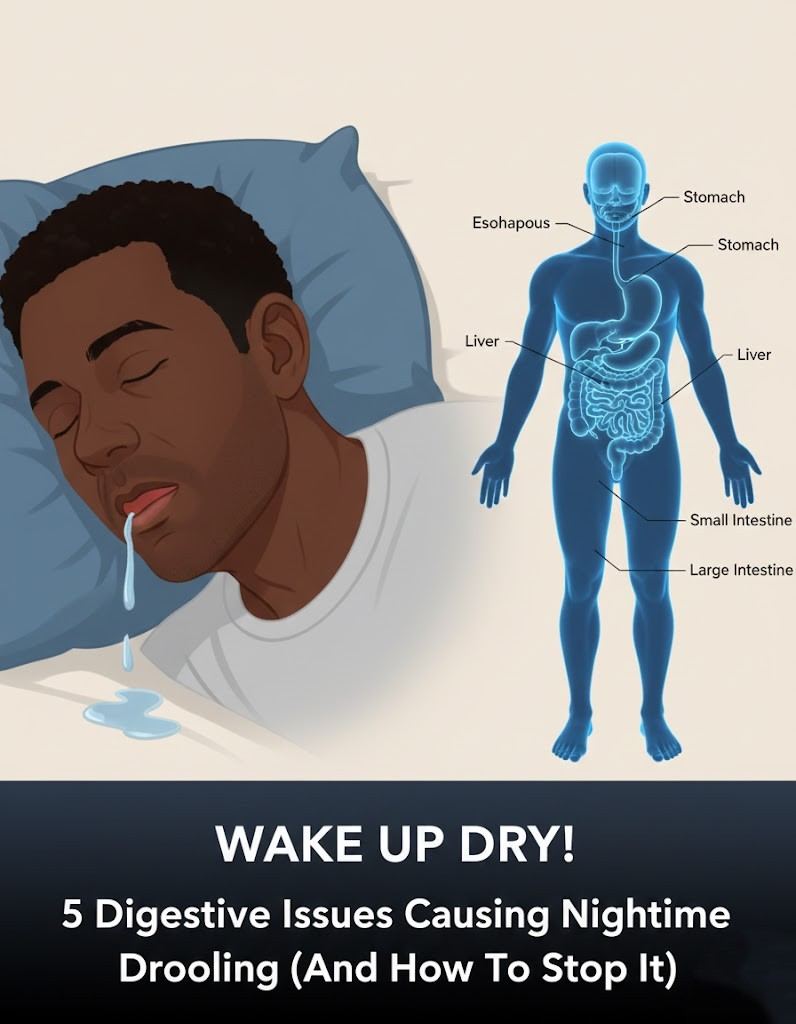
Drooling during sleep is often harmless, but frequent or excessive drooling (called Sialorrhea) can sometimes signal an underlying health issue. Doctors usually look at how often it happens and whether other symptoms are present.
Here are 6 conditions that excessive drooling may sometimes be linked to:
1. Sleep Apnea
One common cause is Obstructive Sleep Apnea.
When breathing repeatedly stops during sleep, people may sleep with their mouth open, which can lead to drooling.
Other signs:
- Loud snoring
- Daytime fatigue
- Morning headaches
2. Acid Reflux
Gastroesophageal Reflux Disease (GERD) can increase saliva production.
The body sometimes produces extra saliva to neutralize stomach acid.
Other signs:
- Heartburn
- Sour taste in the mouth
- Chest discomfort
3. Neurological Disorders
Conditions affecting the nervous system can impair swallowing control, including:
- Parkinson’s Disease
- Stroke
These conditions may reduce the ability to swallow saliva normally.
4. Sinus or Nasal Blockage
Chronic nasal congestion from Sinusitis or allergies can force people to breathe through their mouth during sleep, which often causes drooling.
5. Medication Side Effects
Some medications increase saliva production or affect swallowing muscles. Examples include certain antipsychotics or sedatives.
6. Oral or Dental Problems
Issues like infections, gum disease, or difficulty swallowing can contribute to excess saliva and drooling.
✅ When drooling is usually harmless
It’s often normal if it happens because of:
- Sleeping on your side or stomach
- Deep sleep stages
- Temporary nasal congestion
- Certain sleeping positions
⚠️ When to see a doctor
You should consider medical advice if drooling is:
- New or suddenly worsening
- Happening during the daytime
- Combined with trouble swallowing, slurred speech, or weakness
✔️ Bottom line:
Most nighttime drooling is not dangerous, but persistent or severe drooling can sometimes signal conditions affecting sleep, digestion, or the nervous system.
If you want, I can also show you 7 surprising body signs during sleep that doctors say should never be ignored. 😴🩺
